
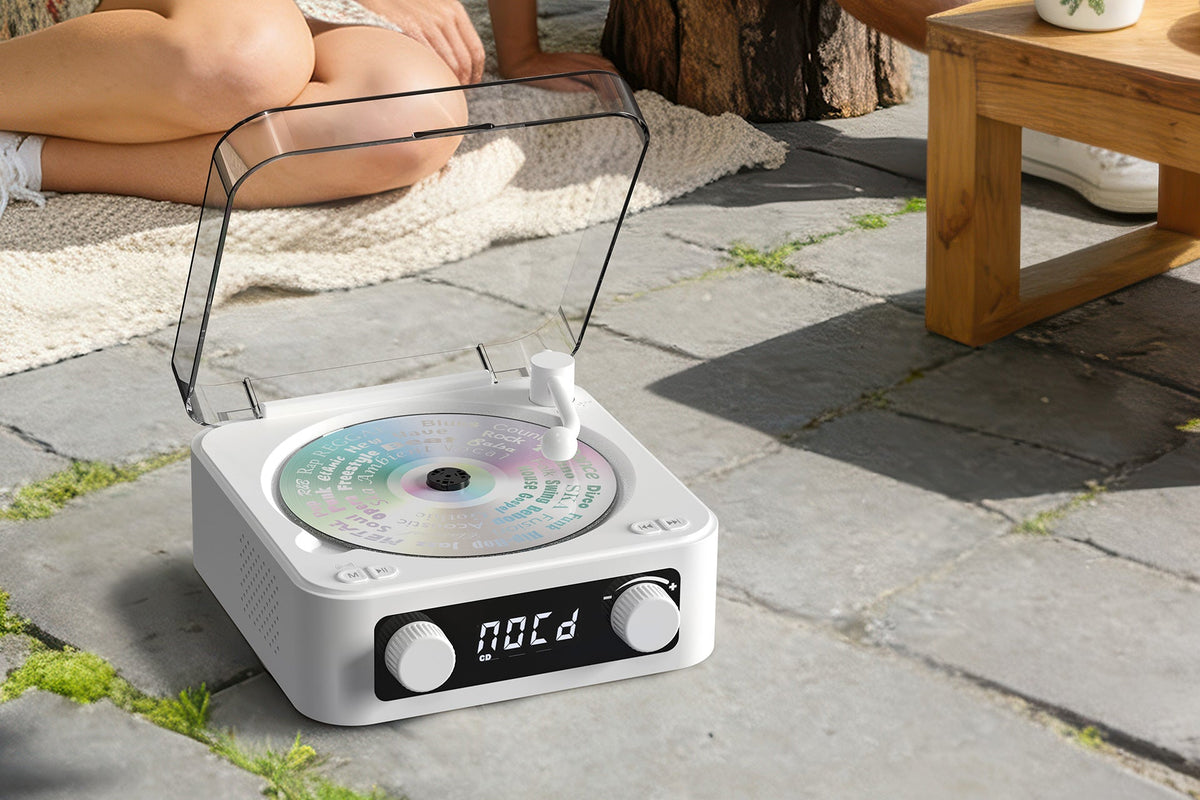
For years, the compact disc looked like a format that had already had its moment.
Streaming made almost any song instantly available. Vinyl became the physical format associated with collecting, nostalgia, and record-store culture. CDs, meanwhile, seemed stuck somewhere in between: too physical to be convenient, but not quite as visually distinctive as vinyl.
In 2026, however, that assumption is getting harder to defend.
CDs are making a comeback, and the revival is being driven by more than nostalgia. People are rediscovering the appeal of owning music, listening to complete albums, collecting physical releases, and having something tangible to connect with their favorite artists.
Recent U.S. music-industry data makes the shift especially interesting. In the first half of 2026, U.S. recorded music revenue increased by nearly 7%, with renewed demand for CDs contributing to the growth. Reuters reported the trend on September 1, citing data from the Recording Industry Association of America (RIAA).
So why are people buying CDs again?

1. Streaming Made Music Convenient — But Not Tangible
Streaming solved one problem extremely well: access.
A phone can hold an almost unimaginable amount of music without actually storing any of it. You can search for an artist, play an album, create a playlist, and move on to something else within seconds.
But convenience doesn't necessarily create a sense of ownership.
A CD is different. You have the physical album in your hands. You can read the booklet, look at the artwork, organize your collection, and choose what to play without opening an app.
That physical interaction is part of the appeal.
The renewed interest in CDs also fits into a larger movement toward physical music. Vinyl has spent years rebuilding its audience, and the success of vinyl helped remind consumers that listening to music can be an experience rather than simply a background activity.
CDs are now benefiting from that same shift.
2. CDs Offer a Different Kind of Music Collection
Vinyl is beautiful, but it isn't the only way to build a physical music collection.
For many listeners, CDs offer a practical middle ground.
They are compact, relatively easy to store, and closely associated with the album format. A CD collection can also be built around something more personal than simply owning a large number of records.
You might collect the albums you listened to growing up.
You might buy CDs from artists you discovered through streaming.
Or you might start collecting physical editions of albums that have become important to you.
The point isn't necessarily to replace streaming. It's to give the music you care about a physical presence.
3. The Album Is Becoming Important Again
Streaming encourages singles, playlists, and algorithmic discovery.
Physical formats encourage albums.
When you hold a CD or vinyl record, the album feels like a complete object. The artwork, track order, packaging, and physical format all contribute to the experience.
That matters at a time when listeners are increasingly interested in music beyond individual tracks.
A physical album gives you a reason to slow down and listen from beginning to end.
That doesn't mean people are abandoning playlists or streaming services. They aren't. Streaming remains the dominant way people consume recorded music.
Instead, physical formats are becoming an additional layer of the listening experience.
Stream when you want convenience. Put on a CD when you want the album.

4. CDs Can Be Easier to Fit Into Modern Homes
There is another reason CDs are interesting in 2026: they work surprisingly well with modern interior design.
A turntable and a vinyl collection naturally create a visual statement. But a CD player can be much more understated.
A compact CD player, a pair of speakers, and a small collection can create a dedicated listening setup without requiring a large piece of furniture.
This makes CDs particularly interesting for apartments, bedrooms, offices, and smaller living spaces.
And as physical music becomes part of home décor, the distinction between audio equipment and interior objects is becoming less obvious.
A record player, CD player, speakers, record stand, and album display can all become part of the room rather than something hidden away in a cabinet.
5. Younger Listeners Are Changing the Meaning of “Old Media”
The CD comeback is also interesting because physical music is no longer simply an older generation's hobby.
Younger listeners who grew up with streaming have very different relationships with physical media.
For someone who has always had instant access to millions of songs, buying a physical album can actually feel new.
The appeal isn't necessarily about remembering the 1990s or early 2000s. It can be about discovering something that streaming doesn't provide: ownership, physicality, artwork, collecting, and ritual.
That's one reason the resurgence of physical music shouldn't be reduced to nostalgia.
For younger listeners, a CD can be a new way of experiencing an album rather than an old way of doing it.
6. Vinyl and CDs Are Not Really Competing
It's tempting to ask whether CDs are replacing vinyl.
That's probably the wrong question.
The more interesting development is that consumers are becoming comfortable with multiple physical formats at the same time.
Vinyl offers large-format artwork, a tactile playing experience, and a strong connection to record-collecting culture.
CDs offer a smaller physical format, convenient storage, and an album-focused listening experience.
Streaming provides instant access.
Bluetooth provides wireless flexibility.
A modern music lover doesn't necessarily have to choose only one.
In fact, a home audio system can combine all of them.
What Does the CD Comeback Mean for Home Audio?
The renewed interest in CDs creates an opportunity to rethink the traditional “vinyl setup.”
A modern listening space doesn't have to revolve around only one source.
You could have:
- A turntable for vinyl records
- A CD player for physical CDs
- Powered speakers for simple stereo listening
- Bluetooth for wireless playback from a phone or other device
- An acrylic record stand for displaying the album currently playing
- Storage for the rest of your physical collection
This kind of setup reflects how people actually listen to music today: across multiple formats and devices.
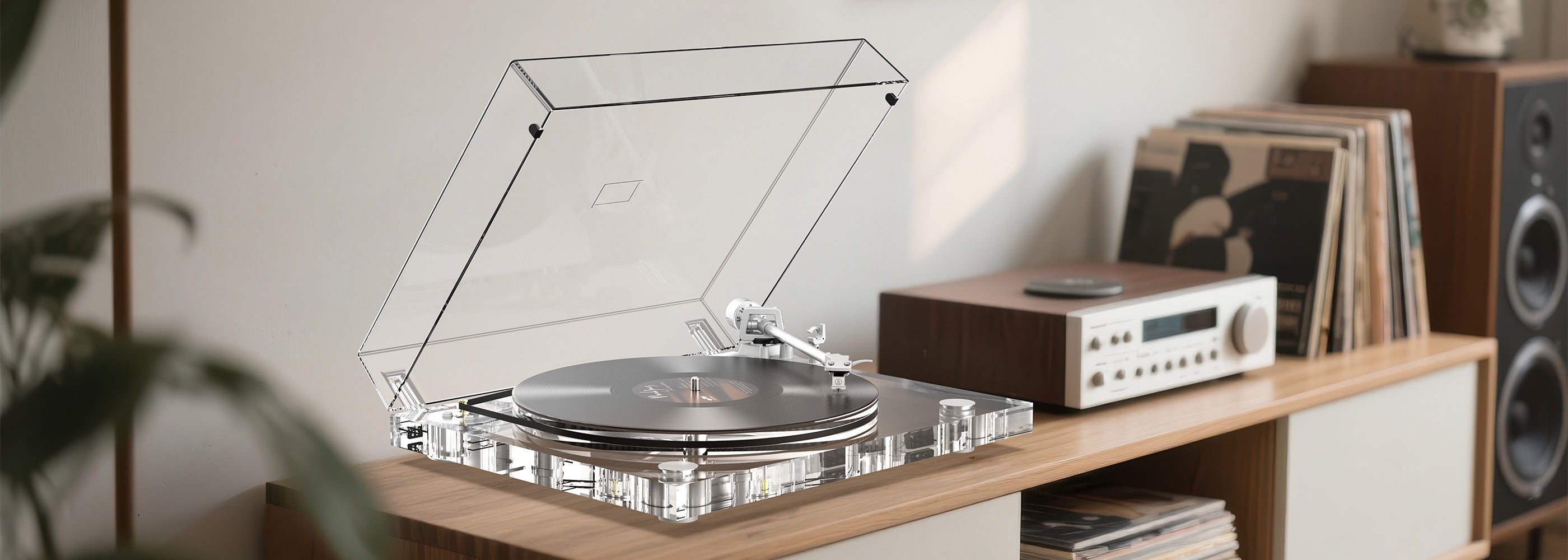
For example, a transparent acrylic turntable such as the AudioKeeper GENESIS-V2 can serve as the visual centerpiece of a vinyl setup, while a CD player can provide another way to enjoy physical albums without taking over the room.
The goal isn't to recreate a 1990s stereo system.
It's to build a listening space that combines the best parts of physical and digital music.
So, Is the CD Really Back?
Yes — but probably not in the way it was before.
The CD is unlikely to replace streaming, and there is no reason to expect physical music to return to the dominant position it held decades ago.
What is changing is the role of physical music.
People are increasingly willing to use streaming for convenience while buying physical albums for collecting, listening, displaying, and connecting with artists.
The 2026 CD resurgence is therefore less about going backward and more about expanding the way we experience music.
Streaming made music easier to access. Vinyl reminded people that music could be something to collect. Now CDs are finding their place in that same physical-music revival.
And perhaps that's the real reason CDs are coming back: people didn't stop loving music. They simply started wanting something they could hold again.






Leave a comment
All comments are moderated before being published.
This site is protected by hCaptcha and the hCaptcha Privacy Policy and Terms of Service apply.