
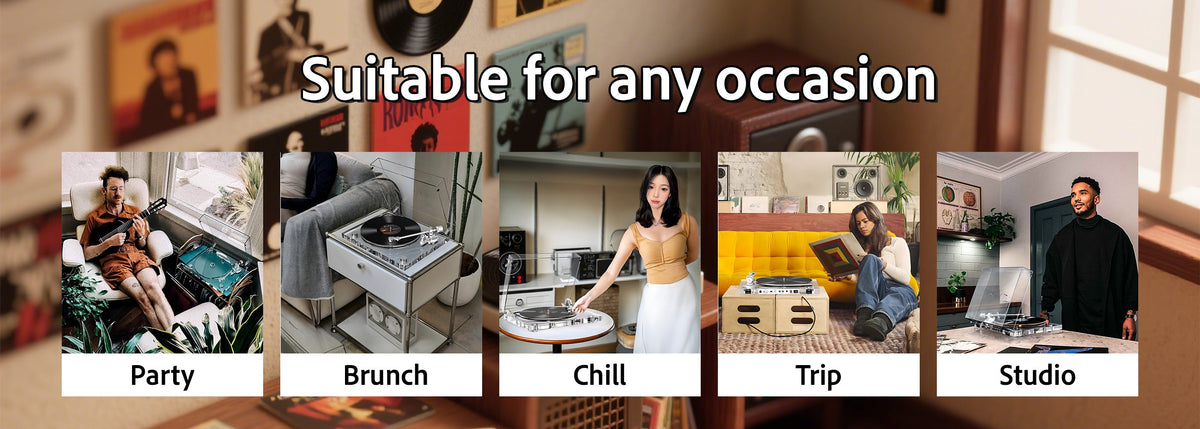
You don't need a dedicated music room to enjoy vinyl.
In fact, one of the nicest things about collecting records is how easily a small listening setup can become part of an ordinary living space.
A corner of the living room. A small console beside the sofa. An unused section of a home office. Even a quiet spot next to a bookshelf can become a place where you keep your records, play an album, and take a few minutes away from everything else.
The goal isn't to fill the room with audio equipment.
It's to create a space that makes you want to use it.
Start With the Turntable
The turntable will naturally become the centerpiece, so start there.
Choose a stable surface that gives you enough room to operate the tonearm and handle your records comfortably. Avoid cramming the turntable between unrelated objects simply because there happens to be an empty space.
A little breathing room can make the entire setup look more intentional.
This is also where the style of the turntable matters.
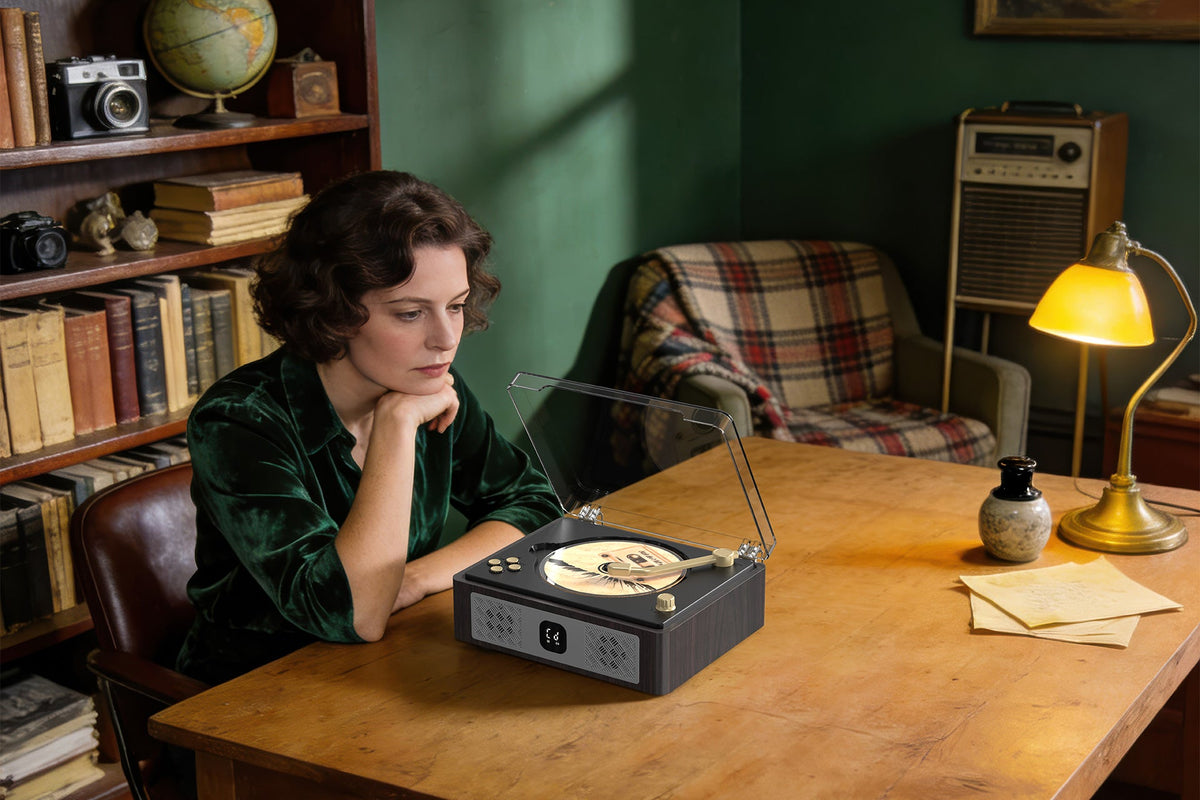
A traditional wooden record player can bring warmth to a room. A metal design can create a more technical, industrial feel.
A clear or acrylic turntable, on the other hand, can feel lighter and more contemporary, especially in minimalist spaces.
The AudioKeeper GENESIS-V2 is designed around that transparent aesthetic, allowing the record and moving parts of the turntable to remain visually prominent rather than hiding everything inside a solid cabinet.

Choose Speakers That Belong in the Room
A beautiful turntable can lose some of its impact if the speakers feel completely disconnected from it.
That doesn't mean they need to match.
Instead, look for a visual relationship.
Compact powered bookshelf speakers can work well in a small listening corner because they provide stereo sound without requiring a separate amplifier.
Bluetooth speakers can offer even more flexibility when you want fewer visible cables.
And a traditional amplifier-and-passive-speaker system can be a beautiful choice when you want the audio equipment itself to become part of the room.
The right answer depends on the space.
A small corner usually benefits from restraint.

Let the Records Add Color
You don't necessarily need artwork on the walls.
Your record collection can do that job.
A few colorful album covers displayed on a shelf or vinyl record stand can add personality without making the room feel overly decorated.
This is one reason vinyl works so naturally with interior design.
Records already come with their own visual language—photography, typography, illustration, color, and texture.
You just need to give them somewhere to be seen.
A small "now playing" display beside the turntable can be especially effective. Change it whenever your listening changes, and the corner never feels completely static.
Keep Storage Close, but Not Crowded
A listening corner should be easy to use.
If your favorite records are stored across the room, you may find yourself playing them less often.
Keep the albums you listen to most within easy reach.
A compact record holder can work well beside the turntable, while the rest of the collection can live in larger shelving elsewhere.
The idea is to separate display from storage.
You don't need every record on show.
Sometimes a small selection looks better—and is more useful.

Think About the Wall Behind the Setup
The space directly behind your turntable can have a surprisingly large visual impact.
A plain wall can keep the setup minimalist.
A shelf can provide space for records, books, or a few decorative objects.
Artwork can create a stronger focal point.
Or you can simply let the turntable and record collection speak for themselves.
There is no need to decorate every available surface.
A little empty space can make the things you have chosen feel more important.

Lighting Makes a Difference
You don't need dramatic colored LEDs to make a vinyl corner feel special.
Soft, warm lighting is often enough.
A nearby floor lamp, table lamp, or indirect wall light can make the setup feel more inviting in the evening.
It can also bring out the texture of vinyl sleeves and the reflections of a transparent turntable.
The goal is atmosphere, not spectacle.
A record corner should feel like somewhere you want to spend time—not a product display in a showroom.
Hide the Cables You Don't Need to See
This may be the least glamorous tip, but it can make one of the biggest differences.
Audio cables are necessary.
Messy cables are not.
Where possible, route cables behind the console or along the back edge of furniture. Keep power cables grouped together and avoid letting RCA cables hang visibly across the front of the setup.
Wireless connectivity can also help.
A Bluetooth-enabled turntable paired with compatible wireless speakers can reduce the number of visible connections and give the setup a cleaner appearance.
That doesn't make wired audio outdated.
It simply gives you another design option.
Mix Materials Instead of Matching Everything
A stylish listening corner doesn't need every piece to come from the same collection.
In fact, mixing materials often makes the setup feel more like a home.
Try combining:
- transparent acrylic
- warm wood
- soft textiles
- metal
- plants
- books
- album artwork
A clear turntable on a wooden console can feel warmer than an all-acrylic setup.
A minimalist black speaker can create contrast.
A colorful record sleeve can become the strongest accent in the entire corner.
The key is balance.

Small Space? Go Vertical
When floor space is limited, use the wall.
A narrow shelf above or beside the turntable can provide storage without taking up another piece of floor space.
You can also use a compact record stand to keep a few albums visible while storing the larger collection elsewhere.
For apartments and smaller rooms, a compact setup can actually look more sophisticated because it forces you to be selective about what stays visible.
Keep the Setup Easy to Use
The most beautiful vinyl corner in the world is pointless if using it feels like work.
Make sure there is enough room to:
- remove a record from its sleeve
- place it on the platter
- operate the tonearm
- access your favorite records
- adjust the volume without moving furniture
Think about the sequence.
You should be able to walk over, choose a record, put it on, and start listening without rearranging the room first.
Good design is practical.
A Few Styles That Work Well
Minimalist
Keep the palette simple and the number of visible objects low.
A transparent turntable, compact speakers, a small record selection, and clean furniture can be enough.
Warm and Organic
Pair a turntable with wood furniture, plants, books, and warm lighting.
This works especially well if you want the listening corner to feel like part of a relaxed living room.
Contemporary
Use clean lines, neutral colors, modern speakers, and acrylic or metal details.
The turntable becomes a design object without looking out of place.
Retro-Modern
Mix vintage-looking records and artwork with modern equipment.
The result feels inspired by the past without turning the room into a museum.

Your Listening Corner Should Feel Like Yours
There is no perfect formula for a vinyl setup.
Some people want a carefully designed minimalist corner.
Others want records stacked everywhere, vintage speakers, and a chair that looks like it has been there for thirty years.
Both can work.
The important thing is that the space reflects how you actually listen.
A good vinyl corner should make it easy to choose a record, comfortable to listen, and enjoyable to look at when the music stops.
That is the real advantage of designing your listening space around the experience rather than around the equipment.
Final Thoughts
Creating a stylish vinyl listening corner doesn't require expensive furniture or a dedicated room.
Start with a good turntable.
Choose speakers that suit your space.
Keep a few favorite records visible.
Use practical storage for the rest.
Manage the cables.
Add some light.
Then stop.
The best listening corners usually leave a little room for the space to breathe.
And whether your centerpiece is a traditional wooden record player or a contemporary transparent model like the AudioKeeper GENESIS-V2, the goal is the same:
Create a place that makes you want to put a record on.






Leave a comment
All comments are moderated before being published.
This site is protected by hCaptcha and the hCaptcha Privacy Policy and Terms of Service apply.