
Streaming solved a problem that had frustrated music lovers for years: getting the music you want no longer requires owning the music you want.
Open an app, search for an artist, tap an album, and the music starts playing.
It is difficult to beat that.
So why are people still buying vinyl records?
In 2026, the interesting question is no longer whether vinyl can compete with streaming on convenience. It cannot, and it does not need to.
Vinyl offers something different.
Streaming is largely about access. Vinyl is about ownership, ritual, physicality, and connection.
That distinction helps explain why the two formats continue to coexist.
Streaming Won the Convenience Battle
Let's give streaming its due.
A modern streaming service can put an enormous music catalog in your pocket. You can discover a new artist in seconds, switch between genres, build playlists, and listen almost anywhere.
There is no need to:
- find physical storage
- clean a record
- flip a record
- worry about scratching a disc
- connect a turntable
- wait for shipping
For everyday listening, streaming is extraordinarily efficient.
It is also difficult to imagine modern music discovery without it.
For many listeners, streaming is the place where they first encounter an artist or album.
And that may actually be part of the reason physical music remains interesting.
So Why Buy Music You Can Already Stream?
Because access and ownership are not quite the same thing.
When you stream an album, you are accessing it through a service.
When you buy the vinyl, you own a physical object associated with that music.
That difference matters to collectors, but it is not only about collecting.
A record gives you something to hold.
You can see the artwork. Read the credits. Put the sleeve on a shelf. Take the record out of its inner sleeve. Place it on the platter.
The album becomes an object rather than simply another item in a library.
For some people, that changes how they listen.
Vinyl Turns Listening Into an Activity
This may be the biggest difference between vinyl and streaming.
Streaming encourages frictionless listening.
Vinyl introduces friction.
And surprisingly, that friction can be part of the appeal.
You cannot usually jump from one record to another without getting up. You have to choose an album before you start. You physically handle the record. At some point, you need to flip it.
None of this is faster.
That is exactly the point.
There is a difference between playing music in the background and deciding to listen to an album.
Vinyl makes the second behavior almost unavoidable.
It turns listening into a small ritual.
The Ritual Matters More Than It Sounds
People sometimes describe vinyl as nostalgic.
That is true for some listeners.
But nostalgia is only one explanation.
The ritual of vinyl can also appeal to people who did not grow up with records.
A younger listener may have no childhood memory of putting a record on a turntable. What they have instead is an experience of digital convenience that has become almost invisible.
Clicking a song is easy.
Choosing a record is deliberate.
That deliberate action can make the listening session feel different—even before the first note plays.
And you do not have to believe that vinyl is technically superior to appreciate that experience.
Is Vinyl Really About Better Sound?
This is where the conversation often becomes unnecessarily tribal.
You will hear claims that vinyl always sounds warmer, more natural, more detailed, or simply better.
Then you will hear exactly the opposite.
The truth is more complicated.
The sound you hear from a vinyl record depends on many variables, including:
- the mastering
- the pressing
- the condition of the record
- the cartridge and stylus
- the tonearm
- the turntable
- the phono stage
- the amplifier or powered speakers
- the listening environment
Digital audio also varies depending on its source, mastering, resolution, codec, playback equipment, and other factors.
So there is no useful universal rule that says:
Vinyl always sounds better.
There is also no useful universal rule that says:
Digital always sounds better.
People can legitimately prefer one format.
The mistake is turning a personal preference into a universal law.
What Vinyl Gives You That Streaming Doesn't
The strongest argument for vinyl may not be a technical one at all.
It is everything surrounding the music.
Album artwork
A record jacket gives album art room to exist.
You can actually look at it.
For artists who treat album design as part of their creative work, that physical scale matters.
Collection
A vinyl shelf is visible.
Your music taste becomes part of your environment.
You can see the albums you love without opening an app.
Ownership
There is something satisfying about buying an album and knowing it is physically yours.
That feeling is especially meaningful to collectors.
Ritual
Selecting, handling, cleaning, and playing a record creates a sequence of actions around listening.
Attention
Because vinyl takes a little more effort, it can encourage a more intentional listening session.
None of these benefits requires vinyl to be technically superior to digital audio.
They are benefits of the format and experience.
Vinyl Is Also a Social Object
A streaming library is mostly private.
A physical collection can be surprisingly social.
Someone visiting your home can see the records on your shelf. They may recognize an album, ask about it, or pull one out to play.
A record collection can start conversations without anyone saying much.
This is one reason the visual side of vinyl matters.
The turntable, speakers, records, storage, and furniture become part of the space.
A vinyl setup can tell a story about the person who lives there.
In that sense, physical music is not only something you listen to.
It is something you live around.
Why Vinyl Fits Modern Homes Better Than You Might Expect
It would be easy to imagine that a turntable belongs in a vintage-style room surrounded by old furniture.
It doesn't have to.
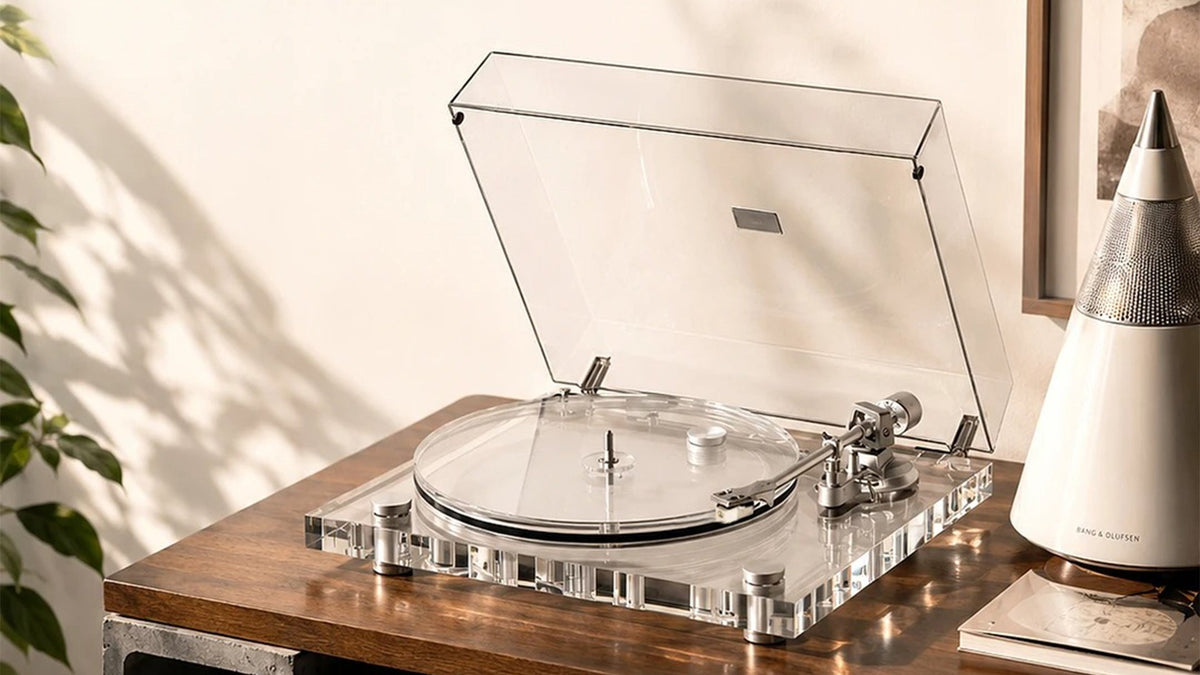
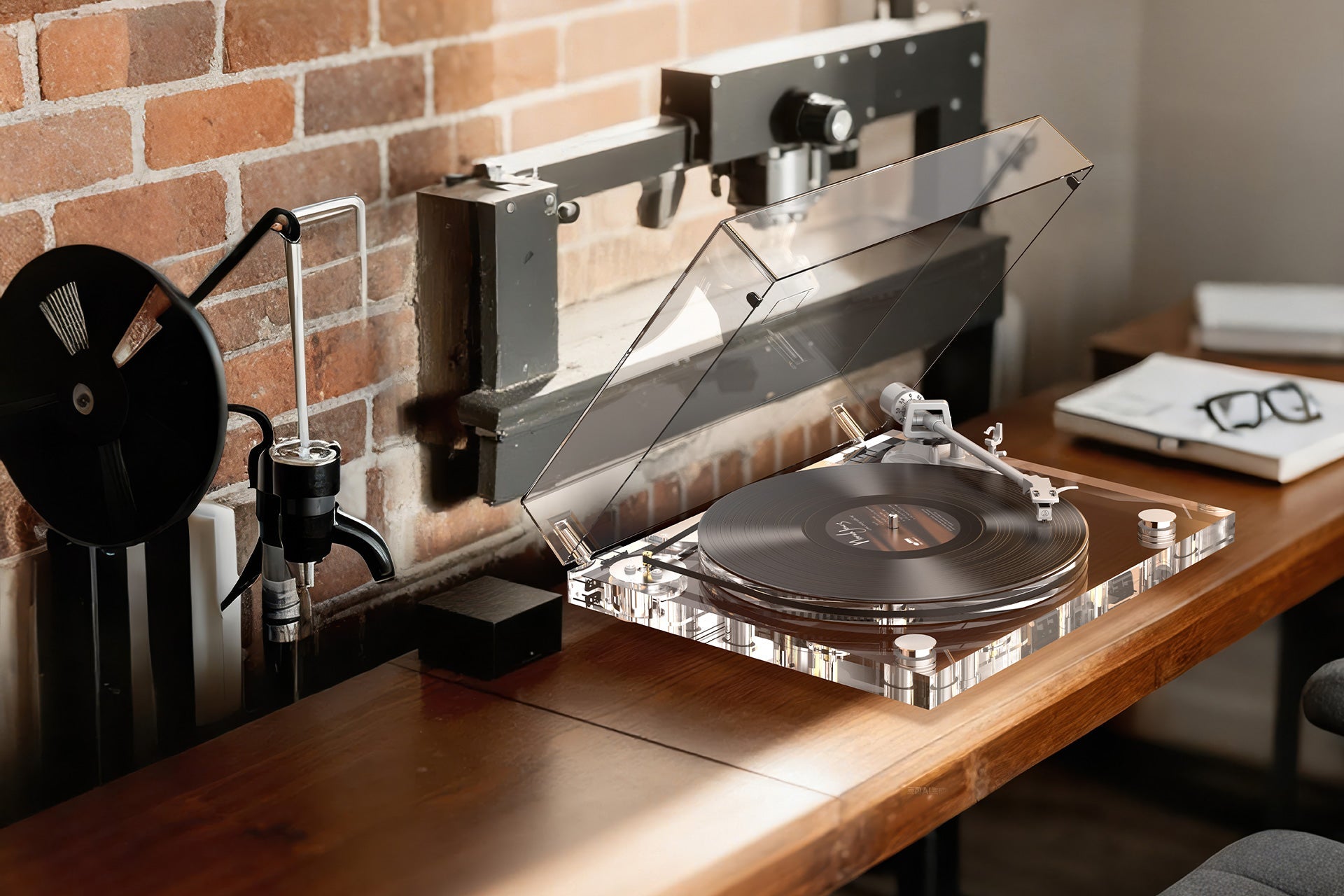
Modern turntables are increasingly designed for contemporary spaces, with minimalist forms, transparent materials, wireless connectivity, and more flexible setup options.
A clear or acrylic turntable can feel particularly natural in a modern room because it has less visual weight than a large opaque enclosure.
Pair it with compact speakers, a simple console, and a small record collection, and the result can feel less like a nostalgic recreation of a 1970s stereo system and more like a contemporary home audio setup.
That is an important distinction.
People are not necessarily trying to recreate the past.
They are finding ways to bring part of the past into the present.
Why Streaming and Vinyl Work So Well Together
Perhaps the biggest mistake in the vinyl-versus-streaming debate is assuming that people have to choose one.
They don't.
A listener might discover an artist through a streaming service, save the album to a playlist, hear it several times, and eventually decide that the album is worth buying on vinyl.
Streaming can be the discovery tool.
Vinyl can become the ownership format.
The relationship can also work in reverse.
Someone might discover a record in a collection, become interested in the artist, and then explore the artist's broader catalog through streaming.
The two formats can solve different problems.
Streaming is excellent for:
- discovery
- convenience
- playlists
- portability
- exploring unfamiliar artists
Vinyl is appealing for:
- collecting
- album listening
- physical ownership
- artwork
- ritual
- display
There is no contradiction in using both.
In fact, for many modern listeners, using both may be the most natural approach.

Why Does Physical Music Still Matter in 2026?
Because convenience does not eliminate the desire for ownership.
The modern digital environment has made information, entertainment, and communication incredibly easy to access.
At the same time, that convenience has made physical objects feel more deliberate.
A physical book is not more convenient than an e-reader.
A film camera is not easier than a smartphone.
A vinyl record is certainly not easier than Spotify.
Yet all of these things can offer a different relationship with what you are doing.
That is part of the appeal of physical media.
The object creates a boundary around the experience.
You do not just press play.
You chose something.
The Return of Physical Music Is Not Simply a Return to the Past
This is where the current vinyl resurgence becomes especially interesting.
If physical music were simply nostalgia, today's record buyers would need to want yesterday's technology exactly as it was.
They don't.
A modern vinyl listener might use:
- a Bluetooth turntable
- wireless headphones
- powered speakers
- a minimalist acrylic record player
- digital streaming for everyday listening
- vinyl for albums they particularly value
That is not a return to the 1970s.
It is a hybrid listening culture.
Old formats are being absorbed into modern lifestyles.
Vinyl Doesn't Need to Beat Streaming
Maybe vinyl has been asking the wrong question.
It doesn't need to defeat streaming.
It doesn't need to be faster, easier, or more convenient.
Those are not the categories where it is strongest.
Vinyl offers something else:
a physical relationship with music.
You can hold it.
Display it.
Collect it.
Play it.
And, for the duration of one side of an album, simply sit there and listen.
That experience is difficult to quantify because its value is partly emotional.
And perhaps that is exactly why it has survived.
Where Does a Modern Turntable Fit In?
A turntable is the bridge between the physical record and the modern home.
It lets you keep the ritual of vinyl while choosing equipment that fits the way you live now.
For some people, that means a traditional wired hi-fi system.
For others, it means a compact setup with powered speakers.
For others still, it means a Bluetooth turntable connected to wireless speakers or headphones.
The point is not to reproduce an old system perfectly.
The point is to create a listening system you actually want to use.
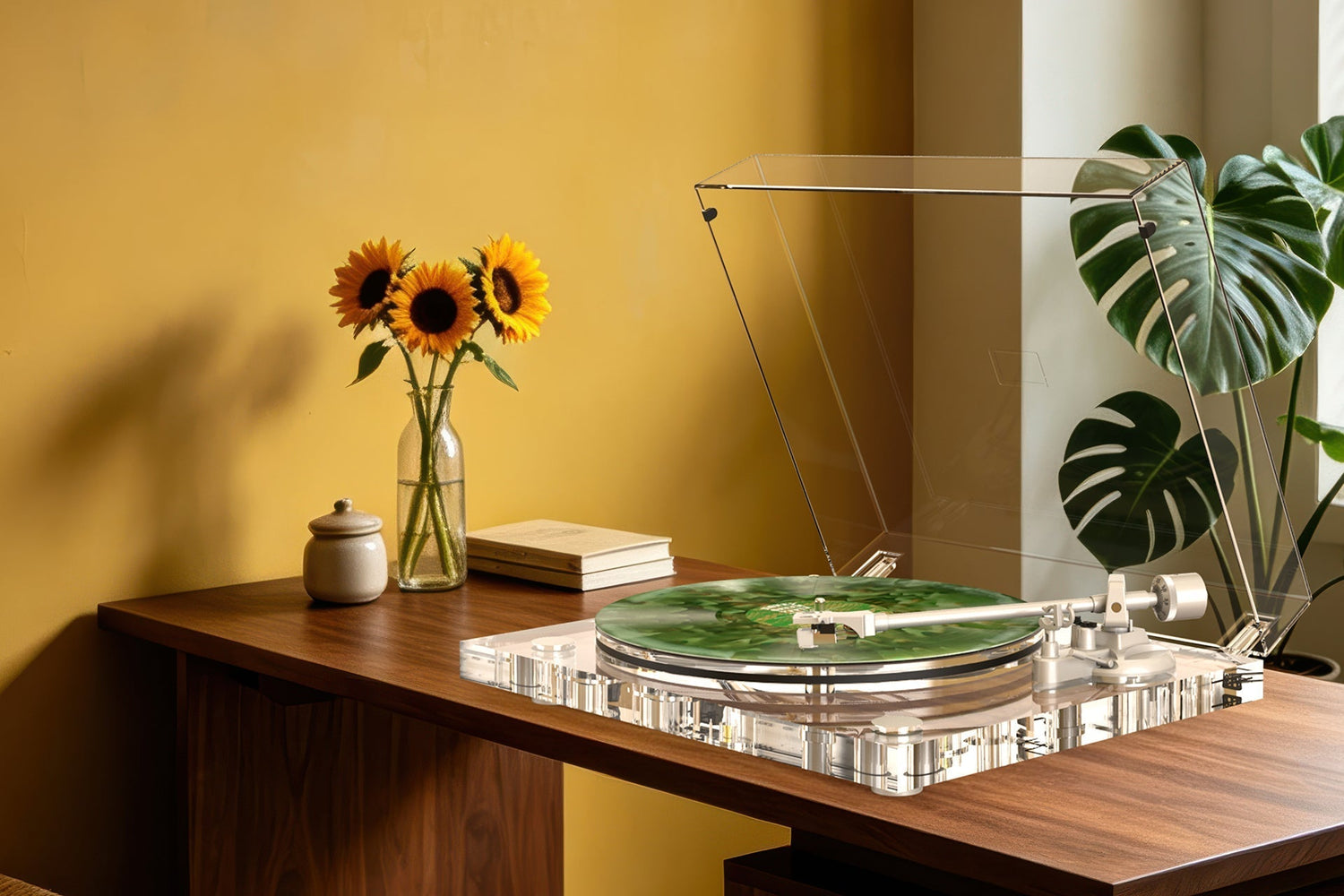
The AudioKeeper GENESIS-V2, for example, takes a distinctly modern approach to the vinyl experience with a transparent acrylic design and contemporary connectivity. Its visual design allows the record and turntable itself to become part of the room, while Bluetooth and RCA connections provide flexibility for different listening setups.
That combination reflects the broader direction of vinyl in 2026:
The format can be old. The way you live with it doesn't have to be.

The Future May Be Both
Streaming is unlikely to disappear.
Neither is the desire to own physical music.
The more interesting possibility is that they continue to serve different roles.
Streaming gives us access to almost everything.
Physical music gives us something to keep.
And vinyl sits in a particularly interesting place between the two: it is a playback format, a collectible object, a piece of design, and a ritual all at once.
That may be why, even in an age when almost any song is only a few taps away, people still choose to put a record on a turntable.
Not because they have forgotten how convenient streaming is.
Because sometimes convenience isn't the only thing we want from music.






Leave a comment
All comments are moderated before being published.
This site is protected by hCaptcha and the hCaptcha Privacy Policy and Terms of Service apply.