
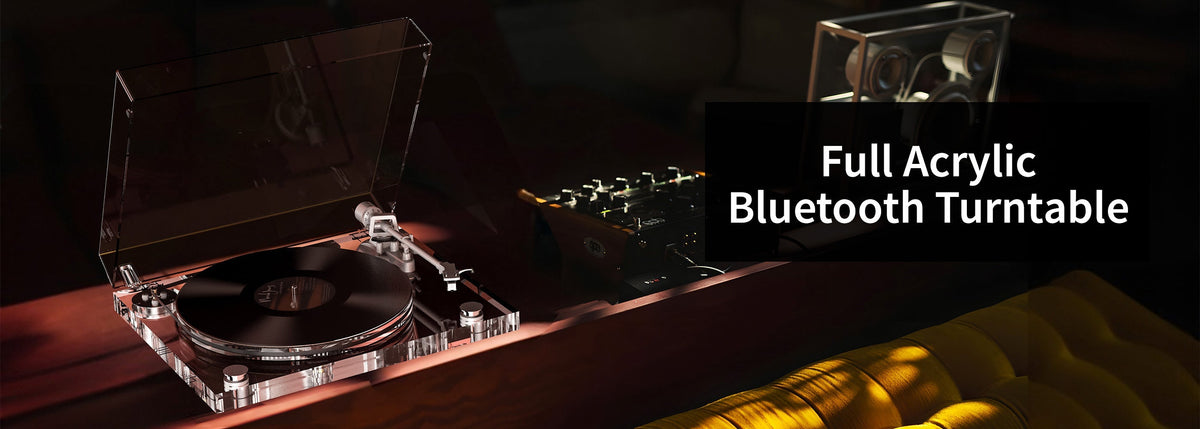
Vinyl and Bluetooth sound like an unlikely pairing.
One belongs to a format invented more than half a century ago. The other became one of the easiest ways to move audio around a modern home. Put them together, though, and the combination makes surprisingly good sense.
A record player no longer has to sit beside an amplifier with a trail of RCA cables running across the room. A Bluetooth turntable can send the audio from a record to compatible wireless speakers or headphones, giving vinyl listeners more freedom over where—and how—they listen.
And this is no longer just a niche feature. In 2026, major audio manufacturers are continuing to bring Bluetooth into new turntable models. Sony's PS-LX3BT and PS-LX5BT, for example, combine traditional record playback with Bluetooth connectivity, while Pro-Ject's E1.2 BT uses a built-in Bluetooth 5.4 transmitter with aptX HD support for wireless listening.
So, what exactly does a wireless turntable do, and does adding Bluetooth take away from the point of listening to vinyl?
Let's unpack it.
What Is a Wireless Turntable?
A wireless or Bluetooth turntable is still a turntable first.
It reads the grooves of a vinyl record with a stylus and cartridge, converts those physical movements into an electrical audio signal, and then sends that signal to an audio system.
The difference is what happens next.
With a traditional wired setup, the signal travels through a cable—usually RCA—to a phono preamp, amplifier, powered speaker, or another compatible audio component.
With a Bluetooth turntable, the turntable can include a Bluetooth transmitter that sends the audio wirelessly to a compatible Bluetooth receiving device.
The basic path looks like this:
Vinyl record → stylus → cartridge → turntable electronics → Bluetooth transmitter → Bluetooth speaker or headphones
That distinction matters because Bluetooth audio has two sides: a source and a receiver.
A Bluetooth speaker is typically receiving audio. A Bluetooth turntable needs to transmit audio.
So a turntable having Bluetooth does not automatically mean it can connect to every Bluetooth device in every direction. Always check whether the turntable supports Bluetooth output/transmission and whether the receiving speaker or headphones support the appropriate Bluetooth audio profile.

Why Are Turntables Going Wireless?
The simple answer is convenience.
But convenience alone doesn't explain why wireless connectivity fits vinyl so well.
1. Modern homes are already wireless
Many homes now use Bluetooth speakers, wireless headphones, soundbars, and other compact audio devices. A turntable that can join that ecosystem doesn't require listeners to rebuild their entire audio setup around vinyl.
For someone who already owns a good Bluetooth speaker, adding a compatible turntable can be much simpler than adding an amplifier, speaker cables, and a new set of passive speakers.
2. People want more flexible room layouts
A traditional stereo system often dictates where the turntable and speakers can go.
Wireless audio loosens those constraints.
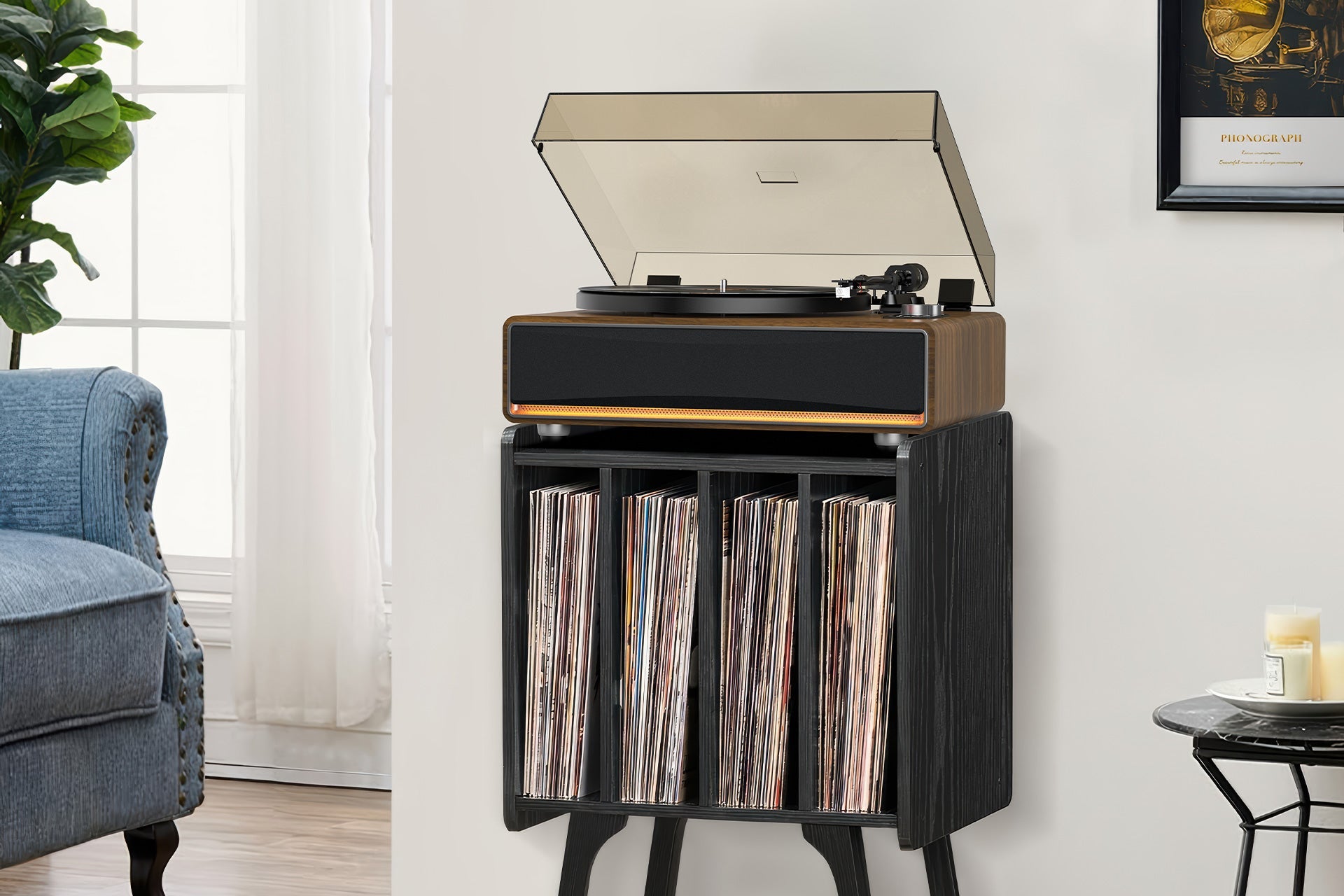
Your records can live on a console, shelf, cabinet, or dedicated vinyl station while your listening position stays somewhere else in the room.
That can be particularly useful in apartments, bedrooms, home offices, or smaller living spaces where every cable and piece of equipment is suddenly part of the room's visual design.

3. Headphone listening is becoming easier
Not every vinyl listener wants to fill the room with sound.
Sometimes the ideal setup is simply:
Turntable → Bluetooth headphones
That can be useful for late-night listening or shared living spaces where a pair of speakers would be too loud.
Current Bluetooth-enabled turntables from Sony, for example, explicitly support listening through Bluetooth speakers or headphones.
4. Vinyl listeners are not all traditional audiophiles
This is an important shift.
Someone buying their first vinyl record collection today may already be using wireless earbuds, a Bluetooth speaker, and streaming services every day.
They may love the physical experience of vinyl without wanting an entirely traditional hi-fi system.
Bluetooth makes room for both worlds.
How Does a Bluetooth Turntable Setup Work?
There are several ways to build a modern vinyl system.
Setup 1: Turntable + Bluetooth Speaker
This is probably the simplest wireless arrangement.
Turntable → Bluetooth → Bluetooth speaker
The turntable acts as the audio source and the speaker receives the wireless signal.
For a new vinyl listener, this can be an attractive setup because there are fewer components to buy and fewer cables to manage.
The important thing is that the turntable must support Bluetooth audio transmission.
Setup 2: Turntable + Bluetooth Headphones
The basic idea is the same:
Turntable → Bluetooth → headphones
This is particularly useful when you want a private listening session.
Just remember that Bluetooth pairing behavior depends on the specific devices. Sony's current support documentation, for example, notes that nearby Bluetooth devices can sometimes interfere with pairing or cause an unwanted device to connect.
In practical terms, turning off Bluetooth on nearby devices you are not using can make first-time pairing easier.
Setup 3: Turntable + Powered Speakers
You don't necessarily need Bluetooth to avoid an amplifier.
With powered speakers, the amplifier is already built into the speakers.
Depending on the turntable, the connection can be:
Turntable → RCA → powered speakers
or:
Turntable → Bluetooth → powered Bluetooth speakers
This is one reason powered speakers are so popular in compact vinyl systems: they can simplify the setup without requiring a separate stereo amplifier.
Setup 4: Turntable + Amplifier + Passive Speakers
And then there is the traditional route:
Turntable → phono stage → amplifier → passive speakers
This remains an excellent option for listeners who want a more conventional stereo system or who already own an amplifier and passive speakers.
Wireless doesn't replace this setup.
It simply gives you another option.
Bluetooth vs. RCA: Which Is Better?
There isn't one universal winner.
It depends on what you want your system to do.
Bluetooth is better suited to:
- simple setups
- flexible speaker placement
- headphone listening
- smaller rooms
- fewer visible cables
- listeners who already own Bluetooth audio equipment
RCA is better suited to:
- traditional hi-fi systems
- wired powered speakers
- amplifiers and receivers
- setups where keeping the signal path wired is a priority
- listeners who want maximum control over their audio chain
The two approaches can also coexist.
A turntable with both Bluetooth and RCA output gives you the freedom to use wireless listening today while keeping a wired upgrade path for later.
That flexibility is particularly useful when you're still figuring out what kind of vinyl system you actually want.
Does Bluetooth Reduce Vinyl Sound Quality?
This is where the conversation gets more interesting.
Bluetooth audio involves wireless encoding and decoding, so the exact result depends on the Bluetooth implementation and codec being used. Bluetooth SIG explains that Bluetooth Classic Audio commonly uses SBC and can also support alternative codecs, while newer LE Audio introduces the LC3 codec and a different architecture.
That means "Bluetooth" is not one single level of sound quality.
Different combinations of source device, transmitter, receiver, codec, and implementation can produce different results.
Some modern turntables are also moving beyond basic Bluetooth implementations. Pro-Ject's E1.2 BT, for example, specifies Bluetooth 5.4 transmission with aptX HD support.
So should you automatically assume that Bluetooth ruins the vinyl experience?
No.
But you also shouldn't assume that wireless transmission is identical to a direct wired connection.
For someone building a compact everyday listening system, the convenience of Bluetooth may be more valuable than the theoretical advantages of keeping every stage wired. For a listener assembling a carefully optimized hi-fi system, a wired connection may still be the preferred route.
The right question is not:
"Is Bluetooth good or bad?"
It is:
"What kind of listening experience am I trying to build?"
Does Using Bluetooth Make Vinyl Pointless?
Not really.
And this is perhaps the biggest misconception around wireless vinyl.
Vinyl is not valuable only because the final sound must travel through a cable.
People choose records for many reasons:
- the physical album
- artwork and packaging
- collecting
- the act of selecting a record
- the ritual of placing the record on the platter
- the feeling of listening to an album rather than endlessly skipping tracks
Bluetooth changes how the resulting audio reaches your ears. It does not remove the physical record, the turntable, or the ritual of playing it.
Think of it this way:
Streaming made music easier to access.
Vinyl made music more tangible.
Bluetooth simply makes it easier to fit that tangible experience into a modern home.
The New Vinyl Setup Doesn't Have to Look Like a Recording Studio
There is also a design advantage to going wireless.
Once you remove some of the cables and extra components, a turntable can become much easier to integrate into a living space.
That matters more than it might seem.
A turntable is usually visible. Unlike an amplifier hidden inside a cabinet, it often sits right where you can see it.
That has helped turn modern record players into something that is both audio equipment and part of the room's aesthetic.
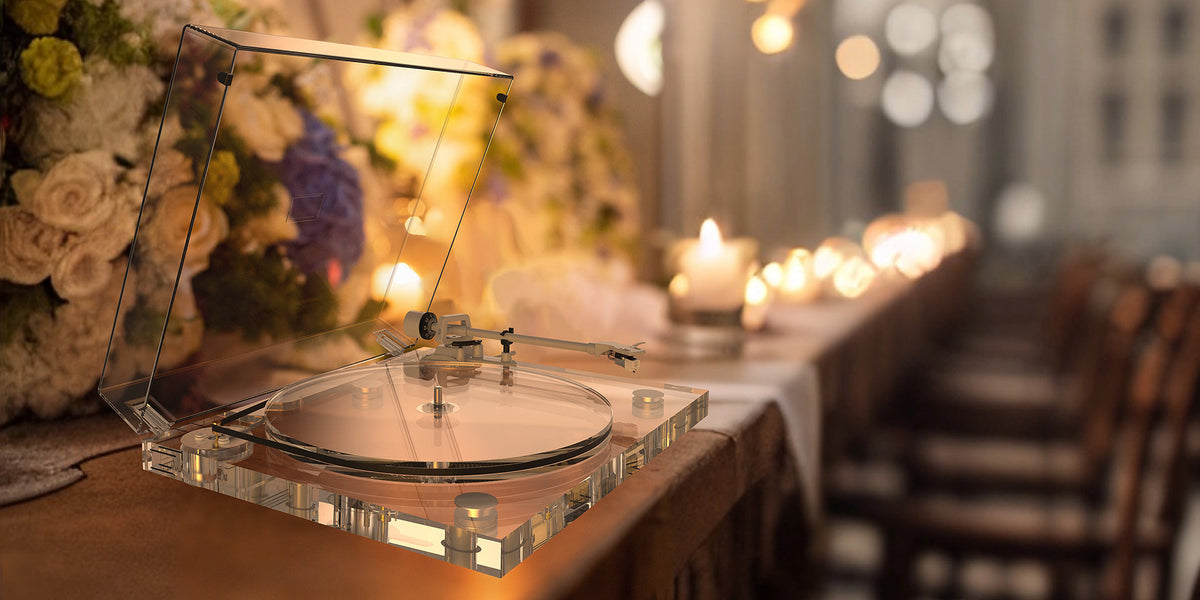
Transparent and acrylic turntables take this even further.
AudioKeeper's GENESIS-V2, for example, combines a full transparent acrylic design with Bluetooth output and RCA connectivity. It supports 33⅓ and 45 RPM playback and can send vinyl audio to compatible Bluetooth speakers or headphones while retaining a wired connection option.
The result is a setup that can look less like a stack of traditional hi-fi components and more like part of the home itself.

Who Should Consider a Wireless Turntable?
A Bluetooth turntable makes particular sense for people who:
Want a simple first vinyl setup.
You can start with a compatible Bluetooth speaker instead of immediately building an entire stereo system.
Live in a smaller space.
Fewer cables and more flexible speaker placement can make a real difference.
Prefer headphone listening.
Bluetooth can make private vinyl listening much easier.
Already own wireless audio equipment.
A compatible turntable can slot into your existing setup rather than forcing you to replace it.
Care about both sound and aesthetics.
Modern wireless turntables can combine contemporary design with traditional record playback.
What Should You Look For in a Bluetooth Turntable?
Not every Bluetooth turntable is built the same way.
Before buying one, look beyond the word "Bluetooth."
Check the Bluetooth direction
Does the turntable transmit audio to speakers and headphones, or does it only receive audio from a phone?
These are completely different functions.
Check the wired outputs
RCA connectivity gives you another way to connect the turntable to powered speakers, an amplifier, or another audio component.
Having both wired and wireless options can make a system much more flexible.
Check the phono stage
A turntable may have a built-in phono preamp, an external phono stage may be required, or the product may provide a switchable option.
Don't assume every turntable works directly with every type of speaker or amplifier.
Look at the cartridge and tonearm
Bluetooth is only one part of a turntable.
The cartridge, stylus, tonearm, platter, motor, tracking setup, and overall construction all contribute to how the record is played.
Consider how the turntable fits your room
This sounds obvious, but it matters.
A good vinyl setup should be something you actually want to live with.
Sometimes the best turntable is not the one with the longest specification sheet. It is the one you can place comfortably, connect easily, use regularly, and enjoy looking at.
The Future of Vinyl May Be Both Analog and Wireless
There is no contradiction in wanting a physical vinyl record and a wireless listening system.
In fact, that combination may be one of the clearest examples of how vinyl is evolving rather than simply returning to the past.
The record remains physical.
The ritual remains physical.
The turntable remains the bridge between the two.
But the rest of the system can be modern.
Bluetooth technology itself is continuing to evolve. Bluetooth SIG's LE Audio platform introduces LC3, lower-power audio capabilities, and Auracast broadcast audio, while the organization is also working on future enhancements for higher-resolution and lossless wireless audio.
That doesn't mean every future turntable will suddenly become wireless—or that wired hi-fi is going away.
It means the boundary between classic vinyl listening and modern wireless audio is becoming less rigid.
And perhaps that's exactly where today's turntable belongs.
Not stuck in the past.
Not trying to become a streaming box.
Just doing its original job—playing records—while fitting naturally into the way people listen to music now.
Frequently Asked Questions
Can a turntable connect to a Bluetooth speaker?
Yes, but the turntable must support Bluetooth audio transmission/output, and the speaker must support compatible Bluetooth audio reception. A Bluetooth receiver-only turntable cannot necessarily send its vinyl audio to a Bluetooth speaker.
Can you connect a Bluetooth turntable to Bluetooth headphones?
Yes, when the turntable supports Bluetooth transmission and the headphones are compatible with its Bluetooth audio connection. The pairing process varies by model.
Do Bluetooth turntables need an amplifier?
Not always. If you are using powered speakers, a separate amplifier is generally not required. With passive speakers, you will normally need an appropriate amplifier or receiver.
Can you use RCA instead of Bluetooth on a wireless turntable?
Many Bluetooth turntables also provide wired outputs. The exact connections vary by model, so check the manufacturer's specifications before purchasing.
Is Bluetooth good for vinyl?
Bluetooth can be a practical way to listen to vinyl wirelessly, particularly for compact or flexible setups. Whether you prefer it over a wired connection depends on your equipment, priorities, and listening habits.
Does a Bluetooth turntable still count as a record player?
Absolutely. Bluetooth changes the audio connection, not the physical process of playing the record. The record is still read mechanically by the turntable's cartridge and stylus.






Leave a comment
All comments are moderated before being published.
This site is protected by hCaptcha and the hCaptcha Privacy Policy and Terms of Service apply.