
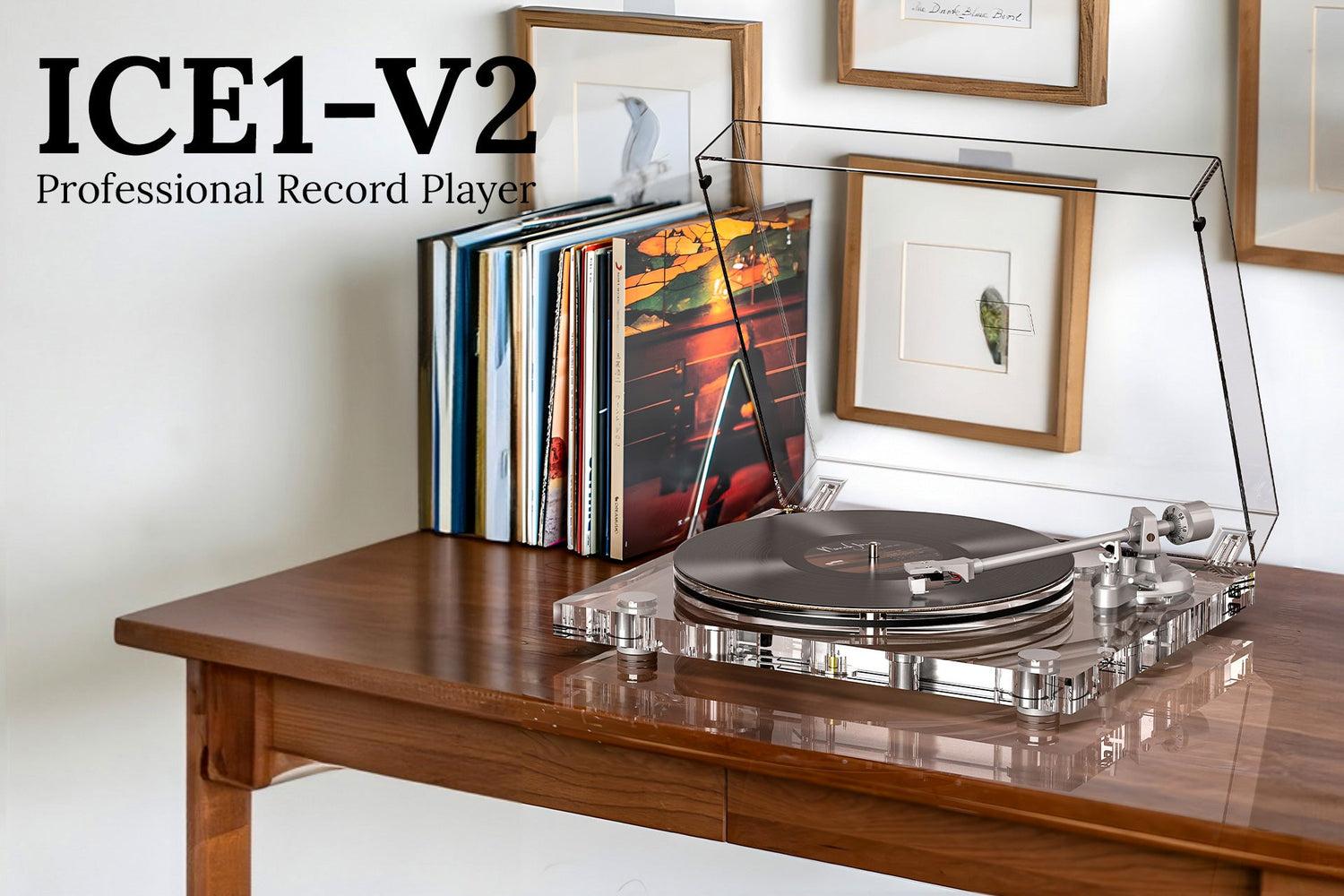
A turntable can be a surprisingly personal piece of furniture.
Unlike a pair of headphones that disappear when you put them away, a record player often stays visible in your home. It sits on a console, shelf, cabinet, or dedicated audio stand, surrounded by the records you love.
That means choosing a modern record player isn't only about sound.
It is also about space, design, connectivity, and how you actually want to listen.
The good news is that you don't need to choose between a beautiful turntable and a practical one. There are plenty of modern options that combine traditional vinyl playback with features designed for the way people live today.
Here is what to consider before buying.
Start With Your Listening Habits
Before comparing specifications, think about how you actually use music.
Do you sit down and listen to an entire album?
Do you play music casually while cooking or working?
Do you prefer speakers or headphones?
Do you already own Bluetooth audio equipment?
Do you want a simple setup, or do you enjoy building a system component by component?
There is no "best turntable" for everyone because there is no single ideal listening habit.
A person who wants a simple evening listening setup may want something very different from someone building a dedicated hi-fi system.
Start with the experience.
Then choose the equipment.
Think About Your Space
A turntable needs more than a place to sit.
It needs a stable, level surface and enough room to operate comfortably.
If your space is limited, look for a setup that keeps the number of components manageable.
A compact system might be:
Turntable + powered speakers
A simpler wireless setup could be:
Turntable + Bluetooth speaker
A traditional system might be:
Turntable + amplifier + passive speakers
The right choice depends on both your room and your equipment.
A small apartment does not necessarily need a huge stereo rack. Likewise, a large living room does not have to be filled with equipment just because you have the space.

Choose the Right Kind of Turntable
Modern turntables come with very different levels of automation and connectivity.
You may encounter:
- manual turntables
- semi-automatic turntables
- fully automatic turntables
- Bluetooth turntables
- turntables with built-in phono stages
- traditional hi-fi turntables designed for external components
None of these categories is automatically better.
A manual turntable may appeal to someone who enjoys the ritual of cueing the tonearm.
An automatic record player can make everyday listening easier.
A Bluetooth turntable can simplify a modern wireless setup.
A traditional turntable may be a better fit if you already own a dedicated amplifier and speakers.
The right feature is the one you will actually use.
Don't Buy "Bluetooth." Buy the Right Bluetooth
This is an easy mistake to make.
A turntable may advertise Bluetooth without necessarily supporting Bluetooth output.
If you want to connect the turntable to wireless speakers or headphones, you need a model capable of Bluetooth audio transmission.
That distinction is particularly important if you're building a modern wireless vinyl setup.
Also consider whether you want wired connectivity as well.
A turntable with both Bluetooth and RCA output gives you more flexibility as your system changes.
You can start wireless and move to a wired setup later—or use both.

Check Whether You Need a Phono Preamp
This sounds complicated, but the basic idea is simple.
A turntable's phono signal needs appropriate amplification and equalization before it can be sent to a standard line-level input.
Some turntables have a built-in phono preamp.
Some amplifiers include a phono input.
Some setups use a separate external phono stage.
When comparing modern record players, check which approach the specific model uses.
This can make the difference between a setup that takes five minutes to connect and one that leaves you wondering why there is no sound.
Look at the Core Turntable Components
Modern design is important.
It just shouldn't be the only thing you evaluate.
Cartridge and stylus
The cartridge and stylus are the parts that actually read the record groove.
Check what cartridge comes installed and whether replacement styli are readily available.
Tonearm
A tonearm needs to track the record consistently and work appropriately with the cartridge.
The shape and construction are worth considering, but don't choose an arm based on appearance alone.
Platter and drive system
Most home turntables use either belt drive or direct drive.
Both approaches can work well. What matters is the quality of the implementation, including speed consistency, motor behavior, and overall construction.
Isolation
A stable surface is essential.
Good isolation can help reduce the effects of unwanted vibration, especially when speakers are located close to the turntable.

Don't Ignore the Design
This is where a modern record player differs from many traditional hi-fi purchases.
Your turntable may become one of the most visible pieces of audio equipment in the room.
So ask yourself:
Do I actually like looking at it?
That may sound superficial, but you are more likely to use equipment that fits naturally into your space.
Wooden turntables tend to feel warm and furniture-like.
Metal-heavy designs can feel industrial or technical.
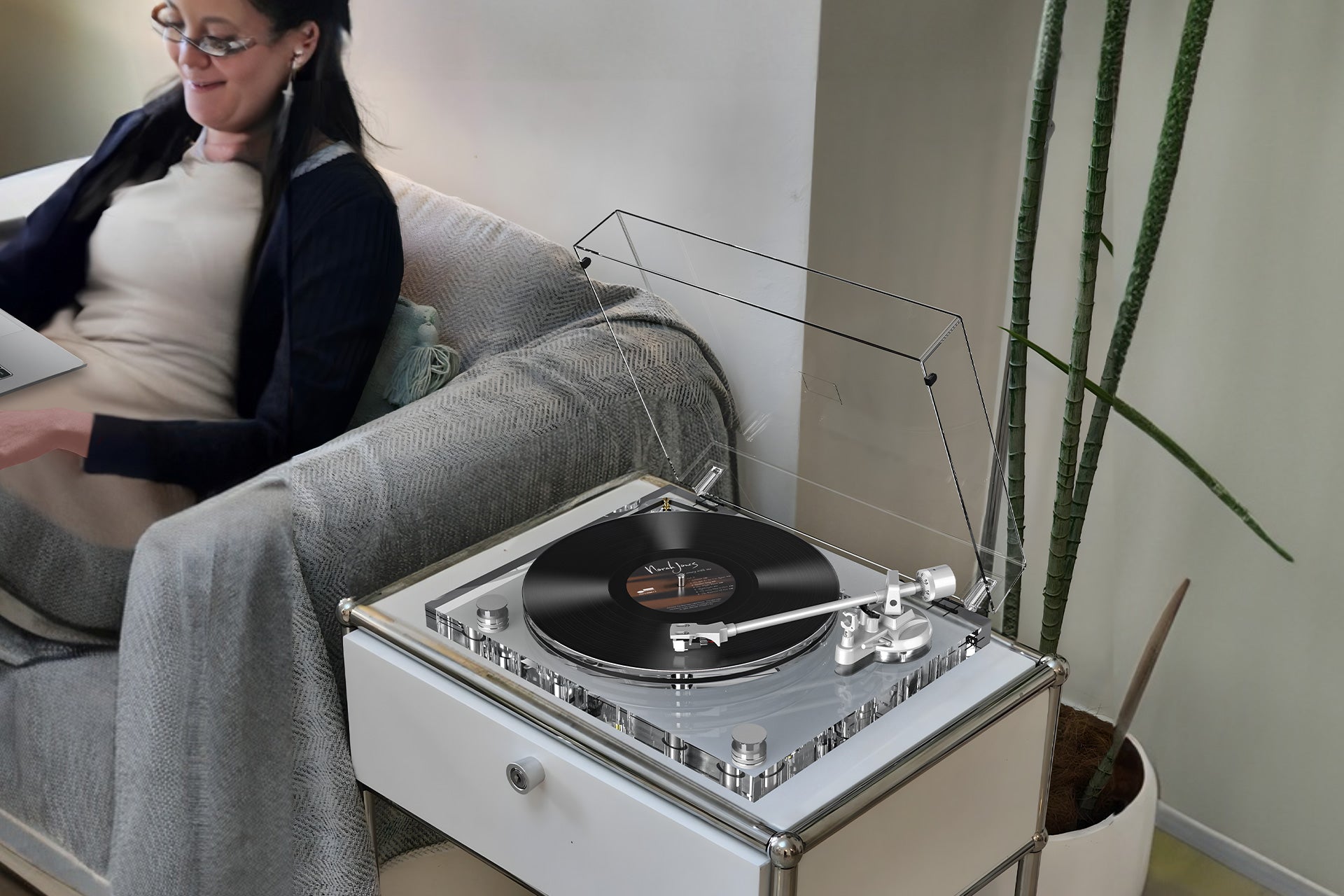
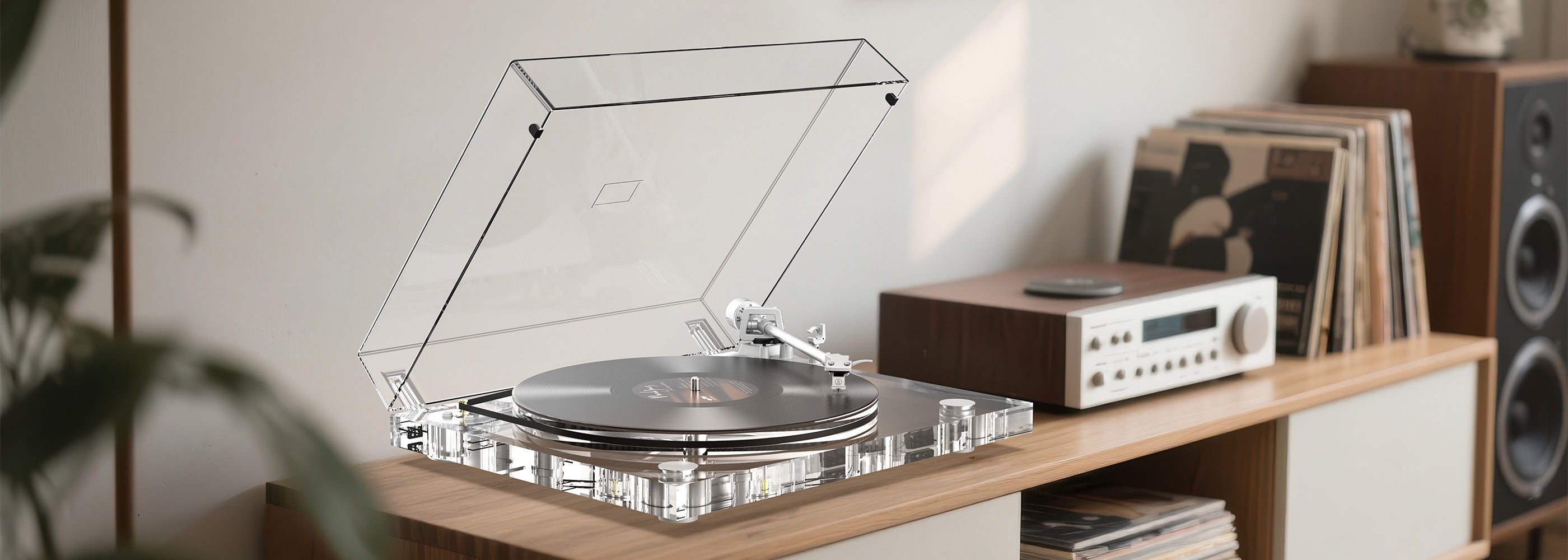
A clear or acrylic turntable creates a lighter, more contemporary look and lets the record itself become part of the visual experience.
That can work particularly well in minimalist interiors.
Think About Your Speakers Before Buying the Turntable
A turntable and speakers are a system.
If you already own speakers, check what inputs they accept.
If you're starting from scratch, decide whether you want:
Bluetooth speakers
for maximum simplicity,
powered speakers
for a compact stereo setup,
or
passive speakers + amplifier
for a more traditional system.
This decision may affect which turntable makes sense.
For example, someone who already owns a good Bluetooth speaker may get more practical value from a turntable with Bluetooth transmission than from paying for features they will never use.
Buy for Your Future Self, Too
You do not need to buy the most expensive turntable you can afford.
But it is worth thinking about where your system might go.
Maybe today you want:
Turntable + Bluetooth speaker
and in two years you want:
Turntable + amplifier + bookshelf speakers
A turntable with both wireless and wired connectivity gives you room to change your setup without replacing the entire source.
The same applies to replaceable styli, cartridge compatibility, and other upgrade considerations.
A little flexibility now can save you from starting over later.
What About Size and Placement?
A good-looking turntable can still be awkward if it doesn't fit your furniture.
Check the actual dimensions, especially if the turntable has a dust cover that opens vertically.
Make sure there is enough room around the tonearm and enough clearance to handle records comfortably.
And remember that vinyl should ideally be kept away from excessive heat, moisture, and direct sunlight.
Your turntable may be designed to be displayed.
Your records still need protecting.
How Much Should You Spend?
There is no magic price where a turntable suddenly becomes "good."
Instead, think about what you need your system to accomplish.
A beginner may prioritize:
- simple setup
- Bluetooth
- built-in phono functionality
- easy operation
- attractive design
A more experienced listener may prioritize:
- cartridge flexibility
- tonearm adjustment
- speed stability
- isolation
- external phono stages
- future upgrades
The important thing is to spend money on features that match your priorities.
A $1,000 turntable with features you never use is not necessarily a better purchase than a less expensive model that fits your system perfectly.

A Modern Example: AudioKeeper GENESIS-V2
The AudioKeeper GENESIS-V2 is designed for listeners who want traditional record playback without giving up a contemporary home setup.
Its transparent acrylic construction makes it visually distinctive, while Bluetooth transmission and RCA connectivity allow it to work with both wireless and wired audio systems.
The GENESIS-V2 also includes an Audio-Technica ATN-3600L cartridge, a straight aluminum-alloy tonearm, belt-drive operation, adjustable counterweight, and a built-in phono preamp.
That combination makes it a particularly interesting option for someone who wants their turntable to be both a listening component and a visible part of the room.
A Simple Checklist Before You Buy
Before choosing your next record player, ask:
1. Where will it live?
Measure the space first.
2. How will you listen?
Speakers, headphones, or both?
3. Do you want wireless connectivity?
If so, verify that Bluetooth transmission is supported.
4. What speakers are you using?
Bluetooth, powered, or passive?
5. Do you need a phono preamp?
Check where the phono stage is handled.
6. Do you care about design?
You will probably be looking at the turntable every day.
7. Can you upgrade later?
Think beyond the first month.
Final Thoughts
Choosing a modern record player is less about finding the one turntable that wins every comparison and more about finding one that fits your life.
Think about your room.
Think about your speakers.
Think about whether you want Bluetooth or a traditional wired system.
Think about how involved you want to be when playing a record.
And yes, think about how you want the turntable to look sitting in your home.
A good modern turntable should not force you to choose between the character of vinyl and the convenience of contemporary audio.
It should make both feel natural.
Because the best record player is ultimately not the one with the longest specification sheet.
It is the one that makes you want to put another record on.






Leave a comment
All comments are moderated before being published.
This site is protected by hCaptcha and the hCaptcha Privacy Policy and Terms of Service apply.