
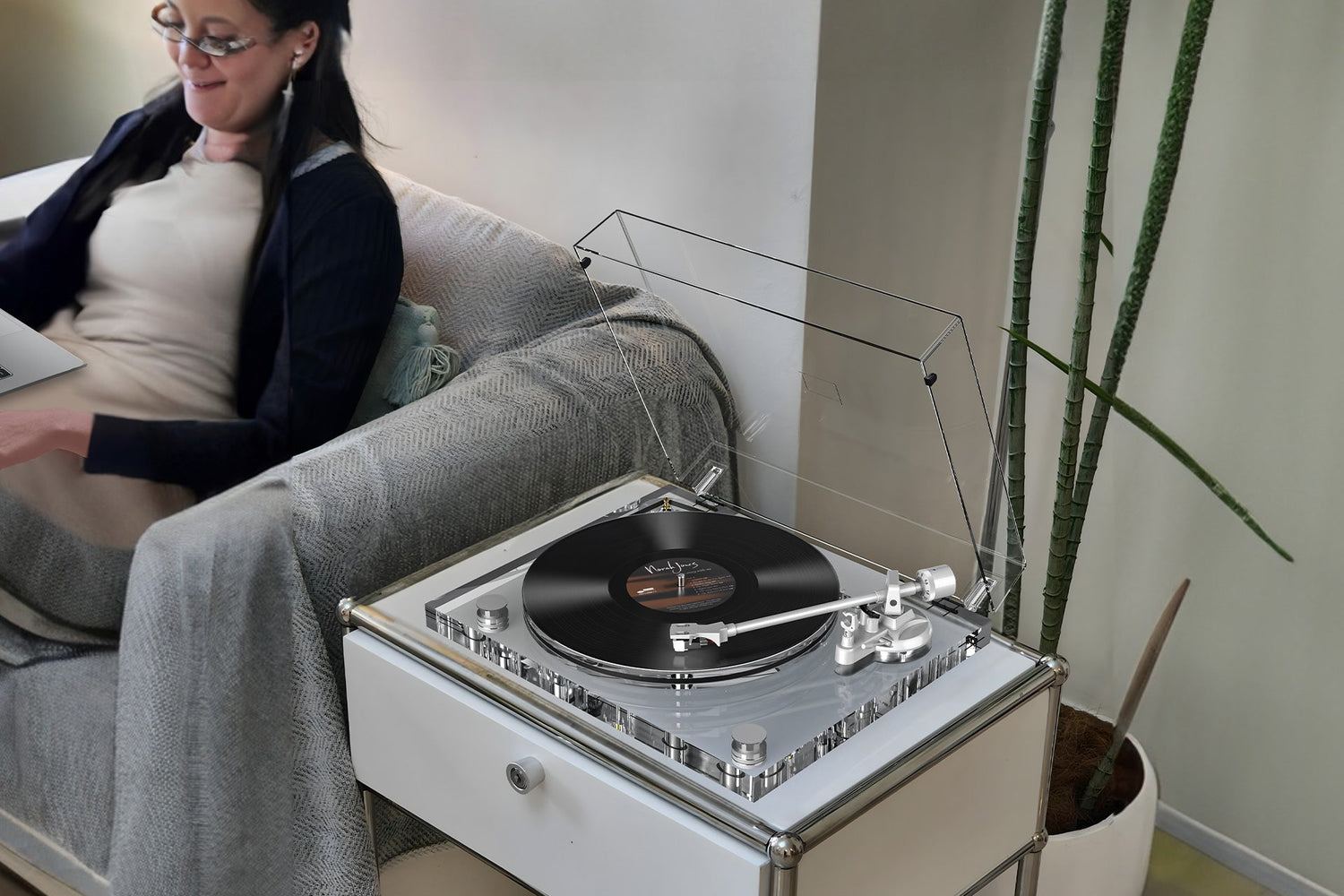
Buying a turntable can lead to an unexpectedly philosophical question:
Do you want the turntable to do more of the work, or do you want to do it yourself?
That is essentially the difference between an automatic turntable and a manual turntable.
With an automatic model, the turntable can handle parts of the playback process for you, such as moving the tonearm into position and returning it at the end of a record.
With a manual turntable, you control those steps yourself.
So which one is better?
Neither.
The better choice depends on what you want from listening to vinyl.

What Is a Manual Turntable?
A manual turntable requires you to operate the tonearm yourself.
Typically, you:
- Place the record on the platter.
- Start the turntable.
- Lift the tonearm.
- Position the stylus over the record.
- Lower the tonearm into the groove.
- Lift and return the tonearm when the record finishes.
It is a simple process, but it is also one of the things people love about vinyl.
You are not pressing play on an app.
You are physically starting the album.
What Is an Automatic Turntable?
An automatic turntable handles some of that process electronically or mechanically.
Depending on the model, pressing a button can start the platter, move the tonearm to the correct position, lower the stylus, and return the tonearm when playback finishes.
Some models are fully automatic, while others are semi-automatic, meaning they may handle the end of the record but require you to start playback manually.
The exact features vary, so "automatic" should not be treated as one universal specification.
Automatic vs. Manual: The Real Differences
| Automatic Turntable | Manual Turntable | |
|---|---|---|
| Ease of use | Very high | Requires more interaction |
| Starting a record | Push a button | Position tonearm yourself |
| Ending a record | May return tonearm automatically | Usually requires manual return |
| Vinyl ritual | More simplified | More hands-on |
| Control | More automated | More direct |
| Beginner friendly | Often | Depends on the user |
| Convenience | Excellent | Moderate |
| Listening involvement | Lower | Higher |
The differences sound simple because they are.
The interesting part is deciding which side you actually prefer.
Why Choose an Automatic Turntable?
Convenience
This is the obvious advantage.
Put on a record, press a button, and let the turntable handle the sequence.
If you are new to vinyl, that can remove some of the uncertainty that comes with manually cueing a tonearm.
Less worry for beginners
A first-time record owner may feel nervous about placing a stylus incorrectly.
Automation can make the process more approachable.
Useful in everyday listening
If you listen to records casually while cooking, reading, or working, convenience can be more important than having maximum hands-on control.
End-of-record protection
Automatic return can prevent the stylus from sitting indefinitely at the end of a record, depending on the design.
That can be particularly useful when you tend to get distracted and forget that an album has finished.
Why Choose a Manual Turntable?
More control
A manual turntable lets you control exactly where and when the stylus enters the record.
For experienced listeners, that direct control is part of the appeal.
The ritual
There is something satisfying about doing the process yourself.
Place the record.
Start the platter.
Cue the tonearm.
Lower the stylus.
It turns listening into an activity rather than simply starting playback.
More design flexibility
Manual turntables are extremely common across entry-level, mid-range, and enthusiast systems, so there is a large variety of designs and configurations available.
Simplicity can be a feature
"Manual" can sound more complicated, but mechanically simpler does not necessarily mean worse.
Some listeners prefer fewer mechanisms between themselves and the basic playback process.

Does Manual Mean Better Sound?
Not automatically.
This is one of the myths worth clearing up.
A manual turntable is not inherently better sounding simply because it requires more user involvement.
Sound and tracking performance depend on the overall design, including the cartridge, tonearm, platter, bearing, motor, isolation, and electronics.
Likewise, an automatic turntable is not automatically lower quality.
There are well-engineered examples of both.
The distinction is primarily about operation and design priorities, not a simple hierarchy of sound quality.
Which One Is Better for Beginners?
This depends on the beginner.
An automatic turntable can be a great choice for someone who wants:
"I just want to put on a record and enjoy it."
A manual model may be better for someone who says:
"I want the process to be part of the hobby."
Neither attitude is more correct.
One person may love carefully cueing the tonearm.
Another may consider that one extra step they never wanted.
The best first turntable is usually the one that makes you want to use it.
Which One Is Better for Audiophiles?
Again, there is no automatic winner.
Many enthusiasts prefer manual turntables because they offer direct control and often provide a wide range of configurations and upgrade possibilities.
But automatic features do not inherently prevent a turntable from being well designed.
If sound quality is your priority, evaluate the entire turntable rather than choosing based on the word "manual."
Look at the cartridge, tonearm, platter, drive system, speed stability, isolation, and phono stage.
Semi-Automatic: The Middle Ground
There is another option that gets overlooked.
A semi-automatic turntable can give you some of the convenience of automation without completely removing the hands-on experience.
For example, you may manually start the record but have the tonearm lift and return automatically when the side ends.
This can be a useful compromise for someone who enjoys cueing the record but does not want to worry about leaving the stylus sitting at the end.
What About Vinyl Care?
Regardless of whether the turntable is automatic or manual, good vinyl habits still matter.
Keep records clean.
Handle them by the edges.
Store them appropriately.
Keep the stylus clean and properly maintained.
Automation does not replace good care.
Manual operation does not automatically mean more careful operation.
The condition of the entire system matters much more.
Automatic vs. Manual for Different Lifestyles
Here's a simpler way to decide.
Choose automatic if you value:
- convenience
- simple operation
- beginner-friendly controls
- casual listening
- automatic tonearm return
Choose manual if you value:
- hands-on control
- the ritual of playing records
- precise cueing
- a more interactive experience
Choose semi-automatic if you want:
- manual starting
- automatic end-of-record behavior
- a compromise between involvement and convenience
What About Modern Turntables?
The interesting thing about modern turntables is that the old automatic-versus-manual debate is no longer the only decision that matters.
You may also be choosing between:
- Bluetooth and wired connections
- built-in and external phono stages
- integrated and separate speakers
- acrylic and traditional materials
- minimalist and vintage-inspired designs
That means a turntable can be modern in some ways while preserving a very traditional playback experience.
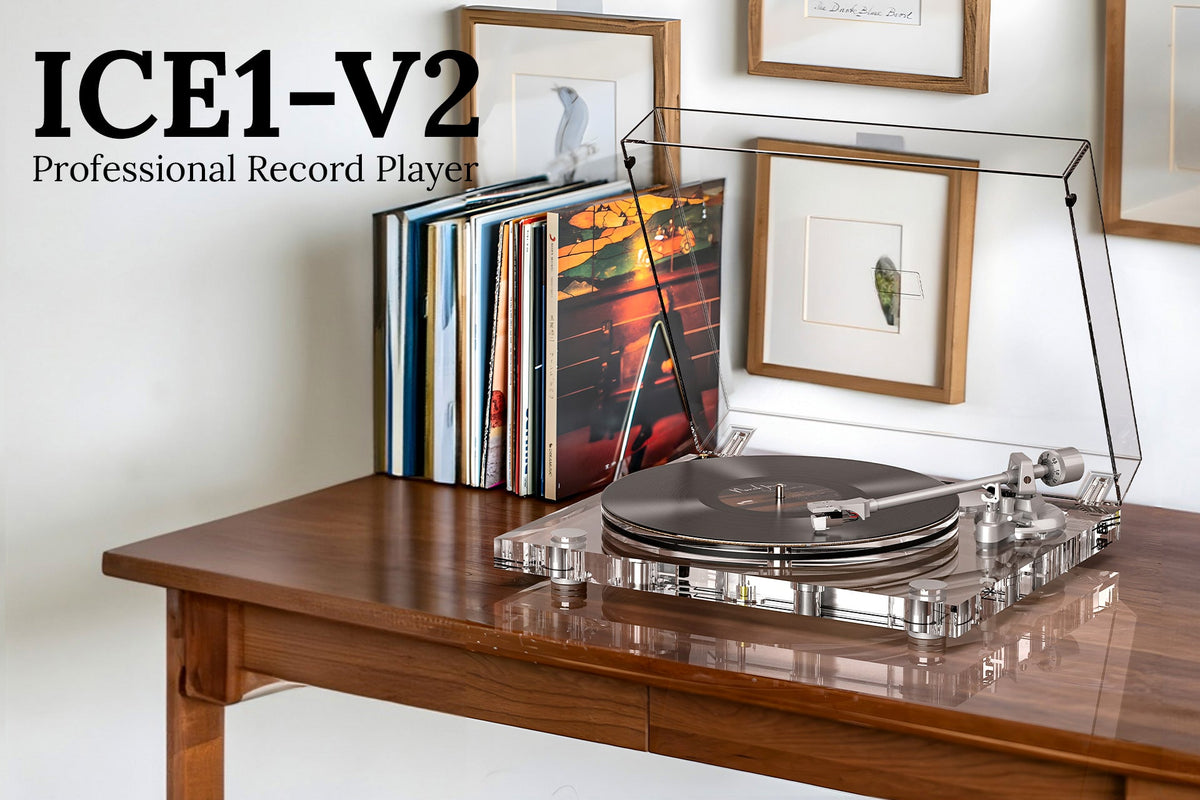
The AudioKeeper GENESIS-V2, for example, takes a manual approach while combining it with contemporary features such as transparent acrylic construction, Bluetooth transmission, RCA connectivity, and a built-in phono stage.
That makes the distinction useful:
The playback can remain hands-on even when the surrounding technology is modern.
So, Which Is Better in 2026?
There is no universal winner.
Automatic turntables are better for convenience.
Manual turntables are better for hands-on involvement.
Semi-automatic models sit somewhere in between.
The most important question is not:
Which type is objectively better?
It is:
Which type makes you more likely to enjoy your records?
For some people, the pleasure is pressing one button and letting the record play.
For others, the pleasure begins before the music does—when they lift the tonearm, find the groove, and lower the stylus themselves.
Vinyl has room for both.
And that is probably the best answer of all.







Leave a comment
All comments are moderated before being published.
This site is protected by hCaptcha and the hCaptcha Privacy Policy and Terms of Service apply.