
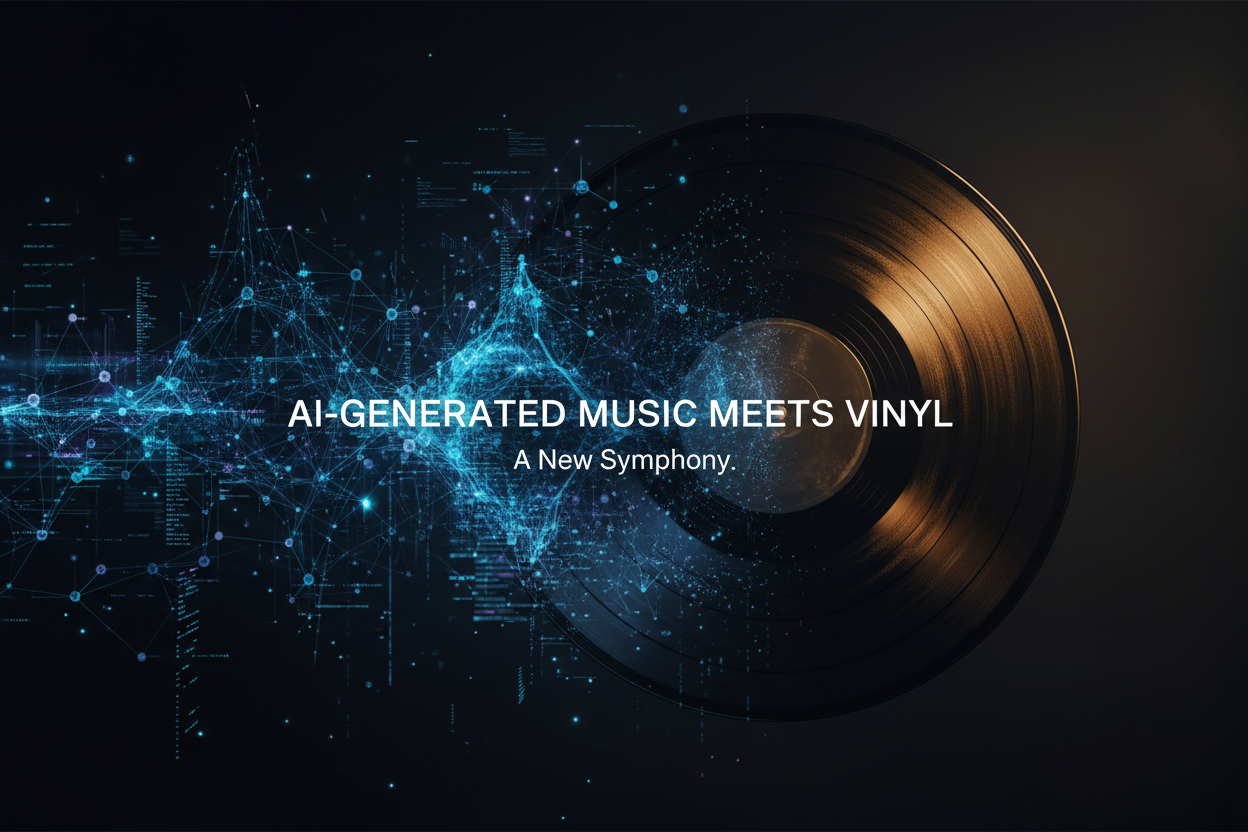
Music has never been easier to create.
With today's generative AI tools, producing a song no longer necessarily requires a studio, a band, or years of technical experience. A few prompts can turn an idea into a melody, lyrics, instrumentation, and, increasingly, a finished track.
At the same time, vinyl remains stubbornly physical.
You cannot prompt a record into existence and have it playing on your turntable thirty seconds later. A record has to be manufactured, packaged, shipped, stored, and eventually placed on a platter.
That creates an interesting question:
What happens when some of the world's most digital music begins appearing on one of its most physical formats?
The answer may tell us something important about why people still value physical music.
AI Makes Music Abundant. Vinyl Makes It Tangible.
Generative AI changes the economics and psychology of music creation.
Creating a song can become dramatically faster.
Experimenting becomes easier.
Producing multiple versions of an idea becomes almost effortless.
But abundance can create its own problem.
When something is easy to generate, it can also become harder to distinguish what is truly meaningful.
Vinyl works in the opposite direction.
A physical record creates scarcity through the simple fact that manufacturing an object takes time and resources.
You have one record.
It takes up space.
You can hold it.
You can lose it.
You can collect it.
And once it is on a shelf, it becomes part of your physical environment.
That contrast between digital abundance and physical permanence may become increasingly interesting as AI-generated music becomes more common.

Can AI-Generated Music Really Belong on Vinyl?
Technically, there is nothing stopping a digitally generated recording from being pressed onto vinyl.
The more interesting question is cultural:
Would people want to own it?
Some already do.
AI-generated songs and projects have begun appearing on physical formats, including vinyl-related services that allow creators to turn AI-generated music into physical records.
At the same time, this has sparked criticism from people who see physical media as an important part of supporting human musicians and creative labor.
That debate is still developing, and there is no settled answer.
But the question itself is revealing.
We usually think of vinyl as the physical opposite of digital music.
AI-generated music makes that distinction much less clear.
The Source of the Music May Matter More Than the Format
Imagine two records.
The first contains an album recorded by a traditional band.
The second contains music generated partly or entirely with AI and then pressed onto vinyl.
Both are physical objects.
Both can be placed on the same turntable.
Both can have beautiful artwork and packaging.
But people may value them for very different reasons.
That tells us something important:
A physical format does not automatically make the content meaningful.
The emotional value of a record can come from the artist, the story behind the album, the listener's personal connection to it, or the experience of discovering it.
Vinyl provides the physical container.
The meaning still comes from what is inside—and what that music means to the person who owns it.
Could AI Actually Make Physical Music More Interesting?
Possibly.
This is where the discussion gets more speculative.
As digital content becomes easier to create and harder to differentiate, physical editions may become more valuable as forms of curation.
Think about it this way.
You could have access to thousands of AI-generated tracks.
But perhaps only one particular album feels worth owning.
A physical release can become a filter.
Instead of asking:
"What music can I access?"
you start asking:
"What music is worth keeping?"
That is a very different question.
And it is remarkably close to the reason people continue to buy vinyl in a world of unlimited streaming.

The Album Could Become Even More Important
AI makes individual tracks incredibly easy to generate.
Vinyl naturally encourages a different way of thinking.
An album has:
- sequencing
- artwork
- packaging
- a beginning and an ending
- physical presence
- a place in a collection
That creates an opportunity for artists to think of the physical edition as more than a container for audio.
A vinyl release could include visual concepts, liner notes, artwork, collectible packaging, or a deliberately limited pressing.
The physical object becomes part of the creative project.
That is already familiar in traditional music.
AI may simply push the idea further.
Will People Want AI Music on Vinyl?
We should be careful here.
There is not enough evidence yet to claim that AI-generated vinyl is becoming a mainstream consumer category.
The technology is developing faster than the market can establish stable habits around it.
Some listeners will probably be curious.
Some will reject it on principle.
Some may not care how the music was created as long as they enjoy it.
And others may actively seek physical releases from human artists precisely because AI-generated content is becoming more common.
The outcome will likely depend less on the technology itself than on trust, authorship, quality, and emotional connection.

What Happens to the Idea of “Authentic” Music?
This may be the most complicated part.
Vinyl already has a complicated relationship with authenticity.
A record is physical, but its sound can have passed through many stages of digital recording, editing, mastering, and production before being pressed.
"Analog" and "authentic" are not necessarily the same thing.
AI makes that even more obvious.
A song generated digitally can still become a physical object.
A physical record does not tell you how the music was created.
So perhaps authenticity will increasingly become something listeners investigate rather than something the format automatically provides.
Who made it?
How was it made?
Why was it released?
Why does it matter?
Those questions may become more important, not less.
Vinyl Could Become Even More About Curation
There is an interesting irony here.
The easier it becomes to create music, the more valuable selection may become.
Record stores have always been places of curation.
So are playlists.
So are music magazines.
So are recommendations from friends.
AI could create an enormous amount of music, but it cannot automatically decide which songs deserve a place in your home.
That is still a human choice.
A record collection might therefore become less about owning everything and more about owning the few things that feel worth keeping.
What Does This Mean for the Modern Turntable?
Probably less than you might think.
The role of the turntable remains remarkably simple:
It plays the record.
Whether the recording began with a live band, a computer, or an AI system does not change the physical job of the turntable.
What may change is the reason people choose the record.
A turntable could become part of a broader physical-media ecosystem where listeners collect different kinds of music for different reasons.
Some records may represent favorite artists.
Others may be limited editions.
Others may simply remind someone of a particular moment in their life.
The technology behind the music can evolve.
The ritual of playing it can remain.
Where AudioKeeper Fits Into This Future
For a brand like AudioKeeper, this raises a broader idea.
The future of physical music may not depend on physical music being the dominant way we consume everything.
It may depend on physical music becoming the format we choose when access isn't enough.
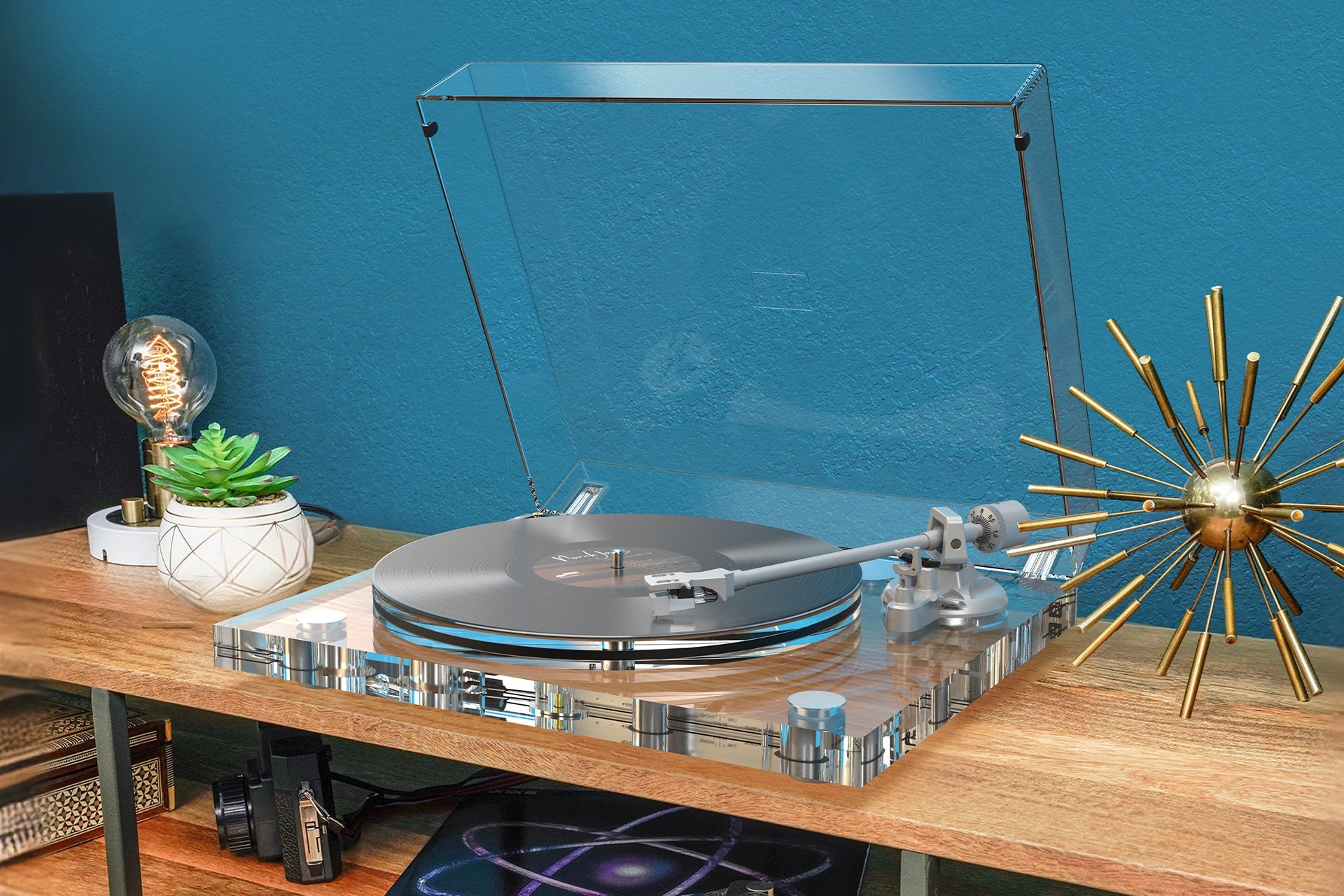
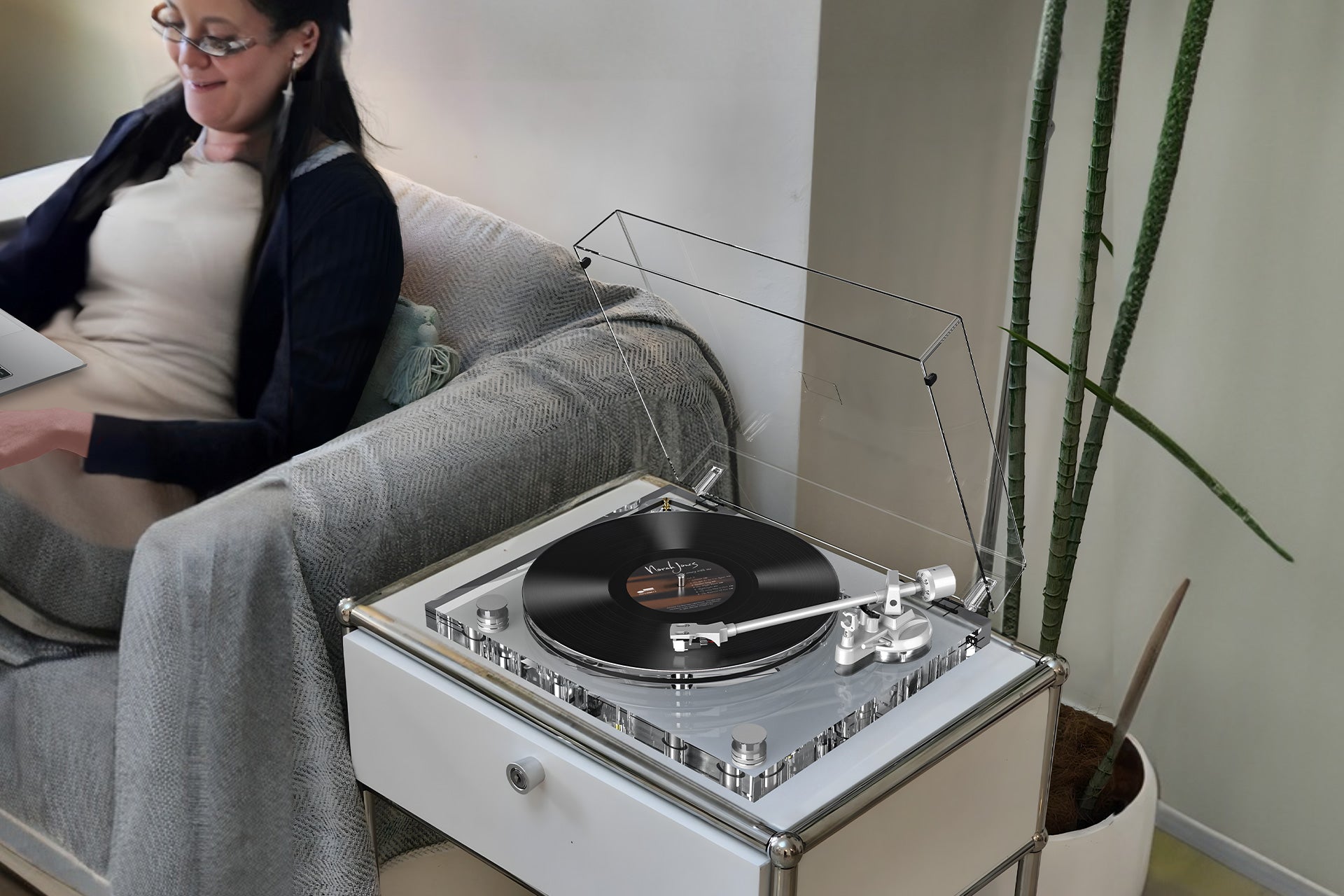
A modern turntable such as the AudioKeeper GENESIS-V2 sits naturally within that idea.
Its transparent acrylic construction makes the physical record part of the visual environment, while Bluetooth and RCA connectivity allow it to fit into both modern wireless systems and traditional wired setups.
The technology around the record can change.
The reason for owning the record can change.
But the basic experience remains wonderfully simple:
Choose something.
Put it on.
Lower the tonearm.
Listen

The Future of Music May Be More Physical, Not Less
It would be easy to assume that AI-generated music will make physical formats less important.
It may do the opposite.
When digital content becomes almost infinitely available, physical objects can become a way of expressing preference.
You don't need to own every song.
You only need to own the ones you care about.
That may be the future of physical music: not replacing streaming, and not competing with AI on convenience, but offering something those technologies cannot provide as easily.
Selection.
Ownership.
Presence.
A digitally generated song can exist anywhere.
A record has to exist somewhere.
And maybe, in a world where music can be created with a prompt, that simple physical fact will matter more than ever.






Leave a comment
All comments are moderated before being published.
This site is protected by hCaptcha and the hCaptcha Privacy Policy and Terms of Service apply.