
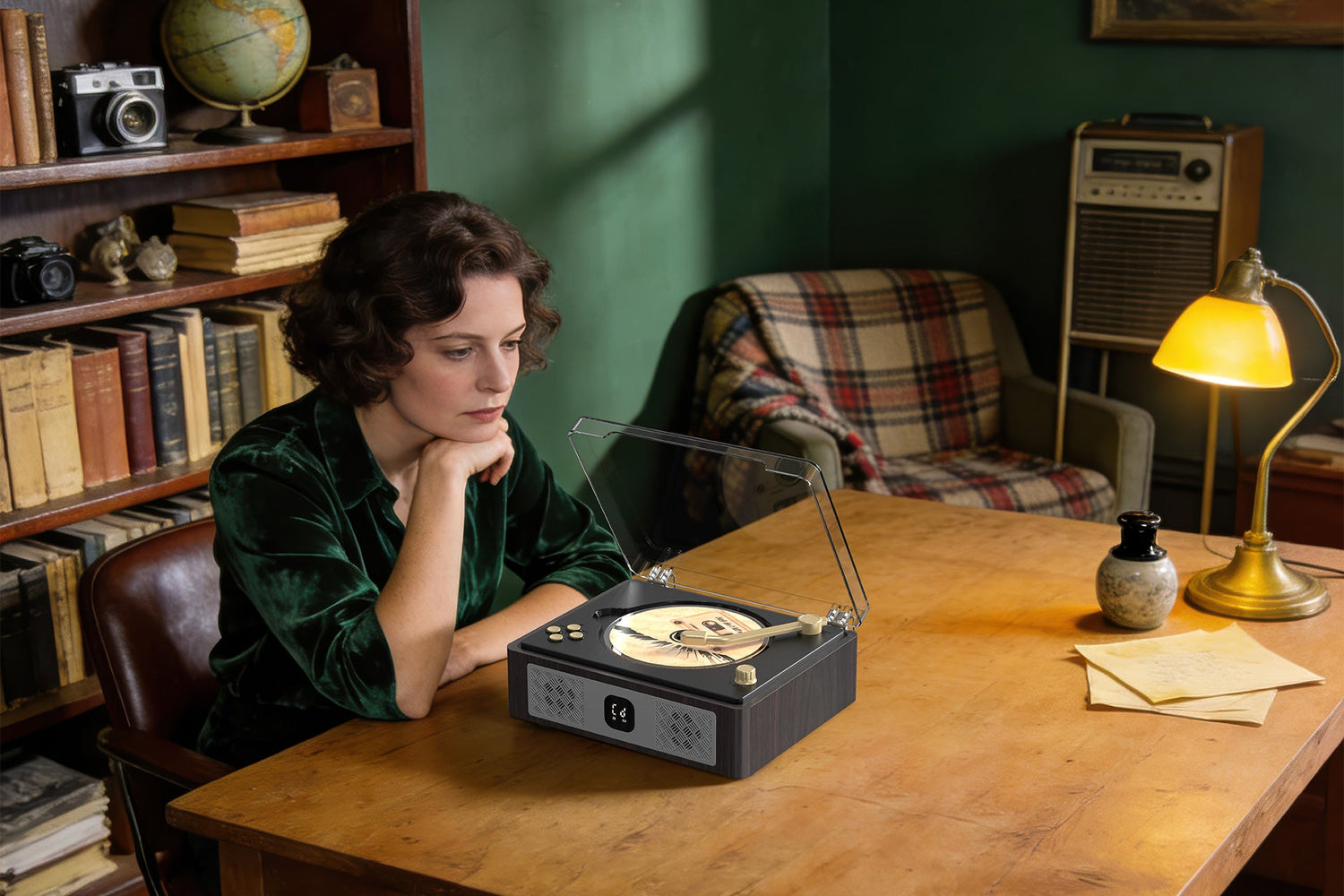
For years, the future of music seemed obvious.
Streaming made physical formats look increasingly unnecessary. Why buy an album when millions of songs could live on your phone? Why keep shelves full of discs and records when a music app could give you almost everything instantly?
And yet, physical music never completely disappeared.
Vinyl continued to grow. Now, CDs are attracting renewed attention too.
That does not necessarily mean people are abandoning streaming. Something more interesting may be happening: listeners are beginning to use physical music for a different purpose.
Streaming is about access.
Physical music is about having something to keep.

Vinyl Wasn't the Only Format Waiting for a Second Act
The vinyl revival gets most of the attention, and for good reason. In the U.S., vinyl revenue reached $1 billion in 2025, marking its 19th consecutive year of growth, according to the RIAA.
But CDs are also having a moment.
Recent reporting from the UK has highlighted growing interest among younger consumers in CDs and dedicated CD players, including compact all-in-one systems that fit more naturally into modern homes.
The interesting part is not that one old format is replacing another.
It is that physical music itself is becoming interesting again.
Why Would Anyone Buy a CD in the Age of Streaming?
The answer is surprisingly similar to why people buy vinyl.
A CD gives you something physical.
You own the album. You can see the artwork, keep it on a shelf, and play it whenever you want without relying on a streaming catalog or subscription.
It is also more compact and generally easier to store than vinyl.
That makes CDs an interesting middle ground:
physical enough to feel tangible, compact enough to be practical.
For listeners who like the idea of owning music but do not want a large vinyl collection, a CD player can make a lot of sense.
Vinyl and CDs Offer Different Experiences
It is tempting to lump all physical formats together.
They are not the same.
Vinyl tends to emphasize:
- album artwork
- large physical sleeves
- collecting
- turntable interaction
- the ritual of playing a record
CDs offer a different experience:
- compact storage
- easy track access
- portability
- less physical space
- straightforward playback
Neither is automatically "better."
They simply make different parts of physical music enjoyable.
That is exactly why both can coexist.

The Physical Album Is More Than the Audio
One of the strange things about streaming is that music has become almost invisible.
You can own hundreds of albums without owning a single physical object connected to them.
Physical music reverses that.
An album has a place.
You can put it on a shelf.
You can see its artwork.
You can remember when you bought it.
And the collection gradually becomes personal.
A shelf of records or CDs is not simply storage. It is a history of what you have chosen to listen to.
That may be one reason physical formats continue to appeal even when digital access is easier.
Why This Matters for Younger Listeners
Younger consumers are not necessarily rediscovering physical music because they want to recreate the way their parents listened to music.
They are combining old formats with modern habits.
A listener might discover an artist on TikTok, stream the album for weeks, buy a vinyl edition, and later pick up the CD because it is easier to keep in the car.
There is no contradiction there.
Modern music consumption is increasingly multi-format.
Streaming can be the discovery engine.
Physical media can become the thing you choose to keep.
The Return of Physical Music Is Not About Rejecting Technology
This is an important distinction.
A modern vinyl listener might use:
- Bluetooth speakers
- wireless headphones
- a smartphone for music discovery
- streaming services
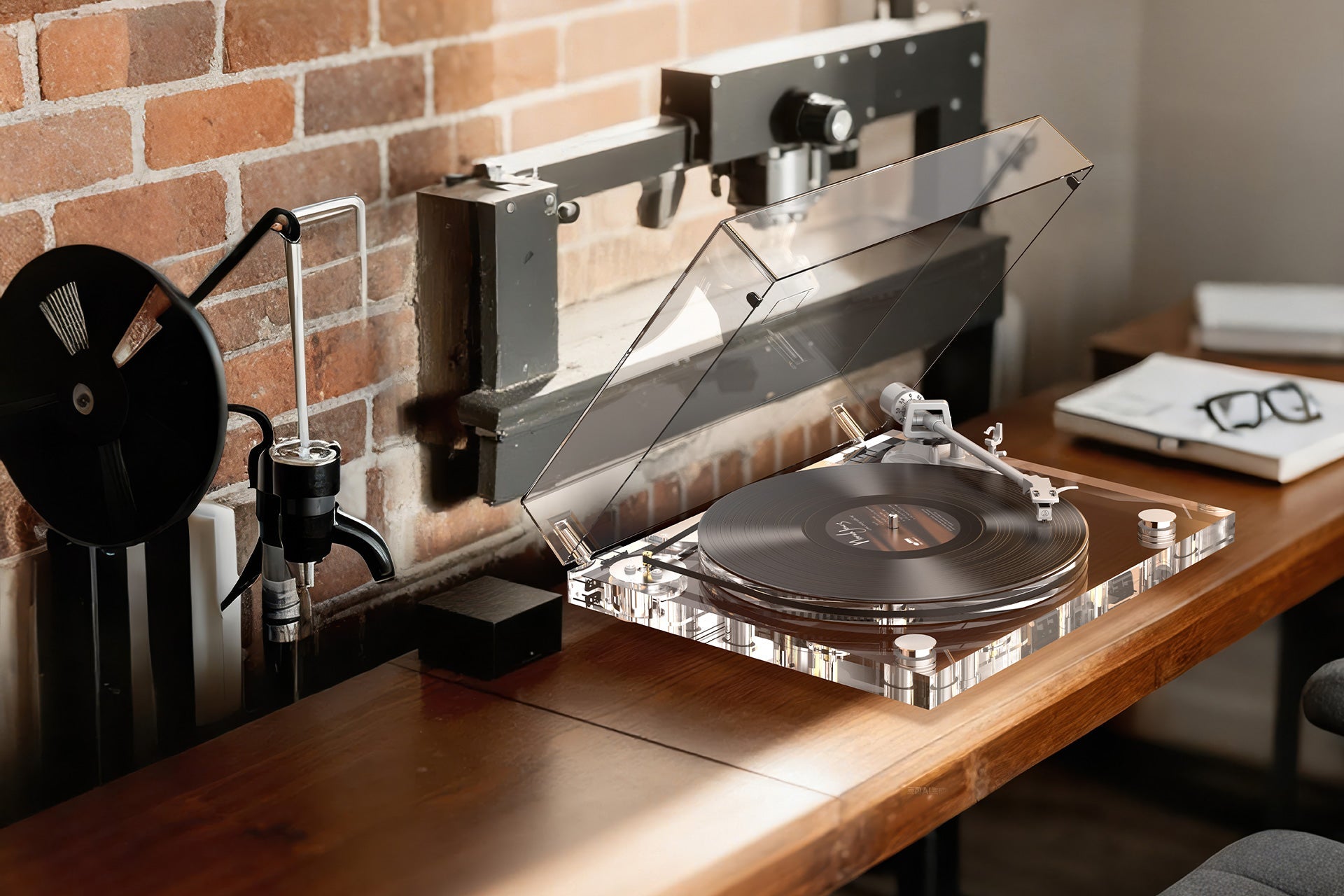
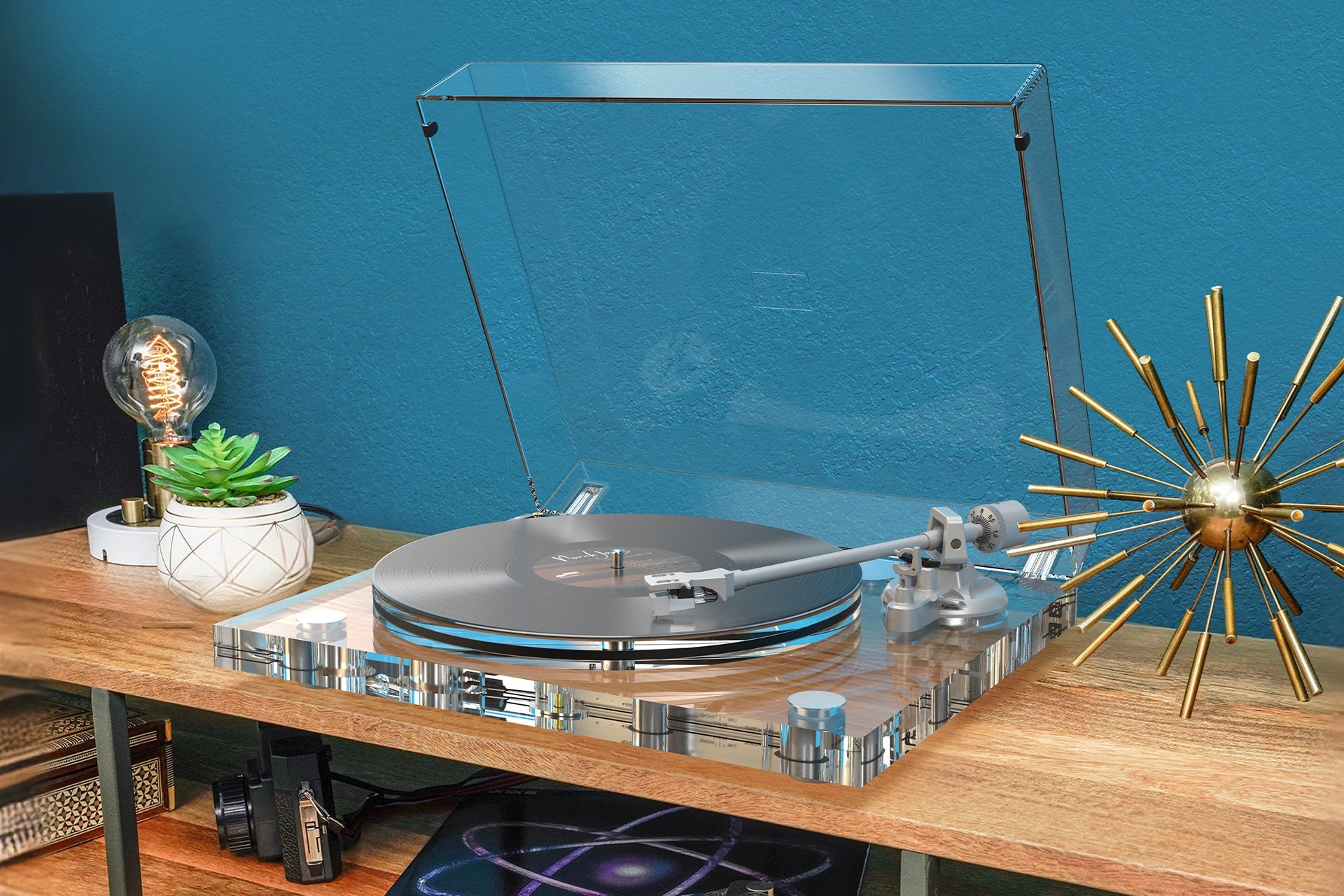
- a transparent acrylic turntable
A CD listener might use a compact modern CD player connected to powered speakers.
Physical music does not have to look old-fashioned.
The format can remain familiar while the equipment around it evolves.
That is especially relevant for younger consumers who may appreciate the physical object but still expect modern design and easy integration into their homes.
Why Modern Audio Equipment Looks Different
The comeback of physical music has created an interesting design opportunity.
People do not necessarily want large stacks of equipment filling an entire room.
They want products that work with the spaces they already have.
That can mean:
- compact CD players
- minimalist speakers
- transparent turntables
- wireless connectivity
- simple storage
- multifunctional audio furniture
The result is a new kind of physical-media setup.
It is less about recreating an old stereo cabinet and more about making physical music fit into modern life.
Vinyl, CDs, or Both?
There is no reason to choose just one.
You might prefer vinyl for albums you want to collect and display.
You might prefer CDs for their compactness and convenience.
You might stream everything you are still exploring.
And you might buy physical copies only when an album becomes important enough to own.
That kind of selective ownership may actually be the most natural way to approach physical music today.
You do not need to buy everything.
You only need to keep the things that matter to you.
The Modern Physical Music Setup
A contemporary physical-media system can be surprisingly simple.
For vinyl, you might have:
Turntable + powered speakers
or:
Bluetooth turntable + wireless speaker
For CDs:
CD player + powered speakers
And for someone who enjoys both:
Turntable + CD player + speakers
The shared component is often the speakers.
This makes it easier to build a system around different formats without turning the room into a wall of equipment.
For vinyl listeners who care about design, a transparent turntable can add another layer to the setup.
The AudioKeeper GENESIS-V2, for example, combines a transparent acrylic design with Bluetooth and RCA connectivity, making it suitable for a modern system where physical vinyl remains the centerpiece without requiring a completely traditional-looking setup.
Physical Music Is Becoming a Choice, Not a Necessity
There was a time when buying physical music was simply how you listened to music.
Then streaming turned physical media into a choice.
And perhaps that is exactly what gives it new meaning.
You do not buy a record because you have no alternative.
You buy it because you want the record.
You do not buy a CD because it is the only way to hear an album.
You buy it because you want something physical to keep.
That changes the relationship between listener and music.
Physical formats become intentional rather than necessary.
The Future May Be More Than Analog vs. Digital
The old debate was:
Vinyl or digital?
The modern answer may be:
Why choose?
Streaming is extraordinarily good at discovery and convenience.
Vinyl offers physicality and ritual.
CDs offer another compact way to own music.
Bluetooth and modern audio equipment make these physical formats easier to integrate into contemporary homes.
The future of music may therefore be less about one format winning and more about listeners choosing different formats for different reasons.
Physical Music Still Has a Place
The return of physical music does not mean the streaming era failed.
Quite the opposite.
Streaming solved the problem of access so well that people are now free to ask a different question:
What music do I actually want to own?
For some listeners, the answer is vinyl.
For others, it may be a CD.
For many, it will be both—alongside streaming.
That is what makes the current physical-music revival interesting.
It is not really a rejection of the future.
It is the future making room for objects again.






Leave a comment
All comments are moderated before being published.
This site is protected by hCaptcha and the hCaptcha Privacy Policy and Terms of Service apply.