
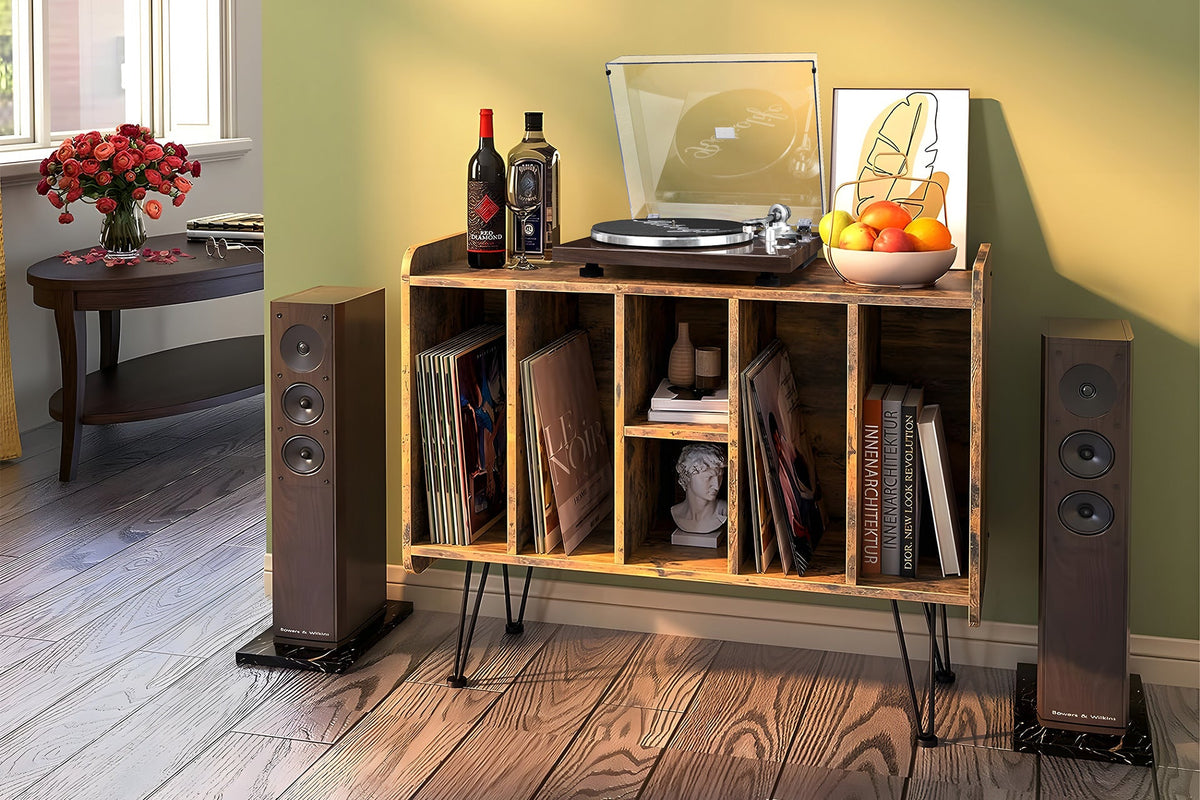
A vinyl collection is meant to be listened to.
But let's be honest: part of the fun is looking at it.
Album covers have always been one of the most visible parts of the vinyl experience. A great sleeve can be just as memorable as the record inside it, and a carefully arranged collection can add personality to a room without needing much additional decoration.
The challenge is finding the balance between display and clutter.
You want your records to be visible and easy to reach—but not piled everywhere.
Fortunately, you don't need a dedicated music room to create a good-looking vinyl display.
Start With What You Actually Want to Show
The easiest mistake is trying to display your entire collection.
You don't have to.
A better approach is to divide your records into two groups:
The collection
The albums you own and store.
The rotation
The albums you're currently playing, your favorites, or the records you want to keep visible.
Your entire collection might need shelves or dedicated storage.
Your rotation can live right beside the turntable.
This simple distinction makes a vinyl setup much easier to organize—and usually much nicer to look at.

Use a Record Stand for the Albums You're Playing
A small vinyl record stand is one of the easiest ways to bring an album into the room.
Place the current record beside the turntable instead of putting its sleeve back onto the shelf immediately.
The cover becomes a piece of temporary décor.
Change it whenever you change the record.
This is particularly effective with albums that have striking artwork because the display becomes part of your listening ritual.
A dedicated "Now Playing" stand can make the setup feel intentional without requiring another large piece of furniture.

Let the Album Artwork Do the Decorating
One advantage of vinyl is that it comes with its own visual language.
You already have:
- photography
- illustration
- typography
- color
- graphic design
Use it.
A few carefully chosen album covers can add more character to a room than a collection of generic decorative objects.
You could display albums around a particular color palette, feature your favorite artists, or simply rotate whatever you're listening to that week.
The display can change without changing the furniture.
Choose Storage That Matches Your Space
Once the collection gets larger, a small display stand isn't enough.
This is where storage becomes important.
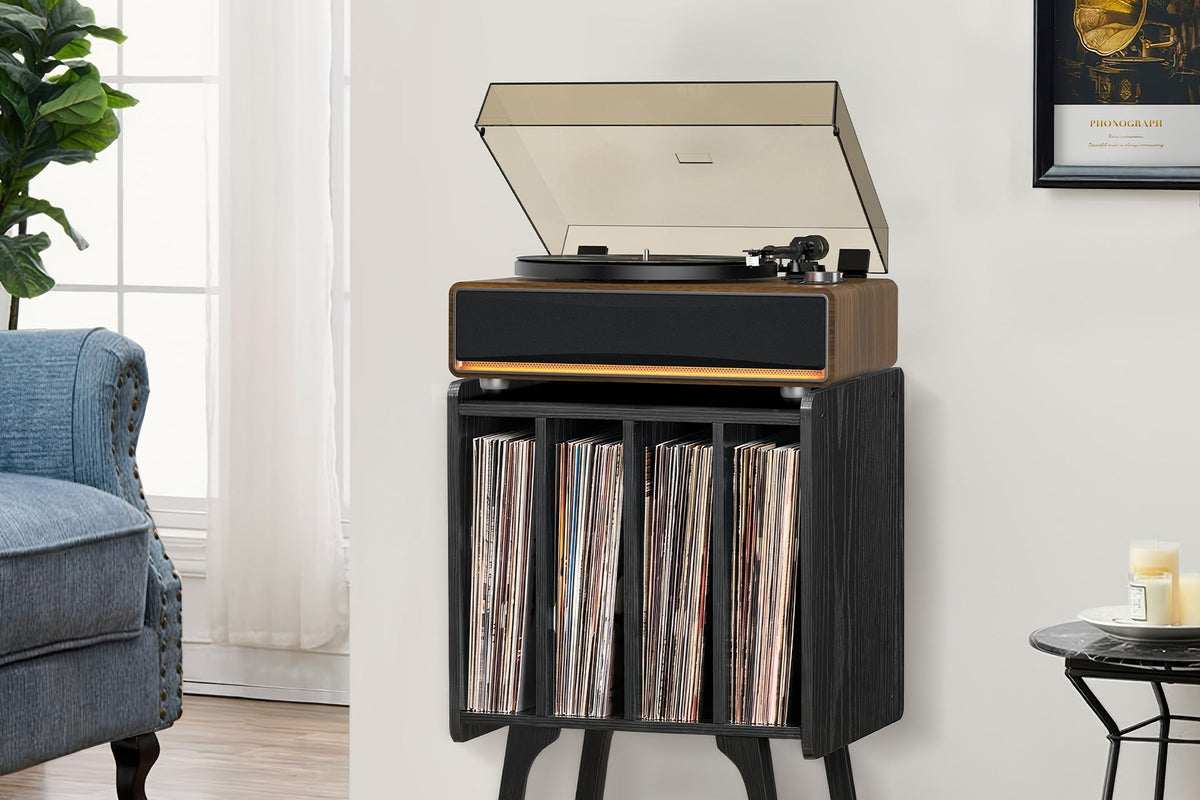
For a growing collection, look for shelving or record holders that allow LPs to remain upright and easy to browse.
The design doesn't need to be complicated.
A simple shelf can work beautifully, especially when the records themselves provide most of the visual interest.
For smaller spaces, transparent acrylic storage can be particularly useful because it provides organization without introducing another visually heavy element.
An acrylic record holder can work well on a console, shelf, or dedicated listening station where you want the collection to remain visible.

Why Acrylic Is Interesting for Vinyl Display
Acrylic has one major visual advantage:
It gets out of the way.
A wooden record shelf can become a strong design element.
A metal rack can create an industrial look.
A clear acrylic record stand tends to let the records remain the stars.
That makes it especially useful in modern or minimalist interiors.
It also pairs naturally with transparent turntables.
A clear turntable and acrylic record holder can create a consistent visual language without making the entire room feel overly matched.
The AudioKeeper GENESIS-V2, for example, uses transparent acrylic as a defining part of its design. Pairing it with clear vinyl storage can extend that sense of visual openness across the listening setup.
Think About Where People Actually Look
A record display works best when it is somewhere you naturally spend time.
Beside the turntable is an obvious choice.
But you can also use:
- a living room shelf
- a console behind the sofa
- a home office
- a reading corner
- a bedroom sideboard
The point is not simply to fill an empty wall.
It is to make your collection part of everyday life.
A record sitting where you can see it is more likely to remind you:
"I haven't played that album in a while."
Try a “Front-Facing” Display
Most record storage shows the spine.
That is useful when you're browsing a large collection, but it hides the artwork.
A front-facing display does the opposite.
It puts the cover on view.
You don't need dozens of records displayed this way. One or two can be enough.
Think of it like changing artwork on a wall.
Except you can change it whenever you want.
Mix Records With the Rest of Your Home
Your vinyl collection doesn't have to live in a separate "music zone."
It can sit alongside:
- books
- plants
- artwork
- photographs
- ceramics
- small lamps
This often makes a collection feel more natural.
Instead of looking like a retail display, it becomes part of the room.
A modern vinyl setup can be especially effective when the records are allowed to interact visually with the furniture rather than being treated as a separate category of object.
Keep the Turntable as the Center
The display should support the listening experience, not compete with it.
A useful arrangement is:
Turntable → speakers → current records → collection storage
The turntable remains the center.
The displayed records support it.
The larger storage system stays nearby but doesn't have to dominate the room.
This is one reason smaller displays often work better than trying to put everything on show at once.
Small Collection? Keep It Simple
If you only own a few records, don't overbuild the setup.
A small record stand beside your turntable may be all you need.
You can keep your records in a compact shelf or cabinet and put the album you're playing on display.
The collection will naturally grow over time.
There's no need to design a 300-record storage system when you currently own twelve.

Larger Collection? Design for Browsing
Once a collection becomes substantial, display becomes less important than accessibility.
You want to be able to find things.
Store records vertically.
Keep them easy to remove and return.
Group them in a way that makes sense to you—alphabetically, by genre, artist, era, or simply "records I play all the time."
There is no objectively correct organization system.
The best one is the one that helps you find the record you're actually looking for.
Don't Forget the Space Around the Records
One of the easiest ways to make a vinyl display look better is to leave some empty space.
You don't need every shelf filled.
You don't need every wall covered.
A small group of records surrounded by breathing room often looks more intentional than a packed display.
This is especially true when using transparent materials.
The openness created by a clear acrylic record holder can be lost if the entire area around it is overloaded with objects.
Display Your Collection Without Sacrificing Protection
Looking good is important.
Protecting the records is more important.
Keep your collection away from excessive heat, moisture, and direct sunlight, and avoid storing records in positions that place unnecessary pressure on the sleeves or vinyl.
Your display area should be attractive, but it should still function as proper storage.
There is no benefit to a beautiful display if it slowly damages the records you bought it to enjoy.
Three Easy Vinyl Display Ideas
The Minimal Setup
Turntable + small record stand + a few favorite albums
Perfect for a bedroom, apartment, or compact living room.
The Dedicated Listening Corner
Turntable + speakers + record holder + larger storage shelf
A good option when vinyl has become one of your main hobbies.
The Integrated Home Display
Turntable + records + books + artwork + furniture
The collection becomes part of the overall room instead of occupying a separate "music area."
Let Your Collection Change
The best part about displaying vinyl is that nothing has to stay the same.
Today's favorite record can become next month's shelf decoration.
A new purchase can take the prime position.
An old favorite can come back after years away.
Your collection is not a static display.
It is a record of what you're listening to.
And that is why a good vinyl display should be flexible enough to change with you.
Final Thoughts
You don't need a huge collection to make vinyl part of your home.
Start with one or two records you love.
Give them a good place to be seen.
Keep the rest organized and protected.
A record stand can make a single album feel like a feature.
A larger vinyl storage system can keep a growing collection organized.
And clear acrylic can tie everything together in a clean, contemporary setup—especially when paired with a transparent turntable such as the AudioKeeper GENESIS-V2.
The goal isn't to display every record you own.
It's to make the records you love visible enough that you remember to play them.
Your collection shouldn't just sit there looking good. It should keep spinning.






Leave a comment
All comments are moderated before being published.
This site is protected by hCaptcha and the hCaptcha Privacy Policy and Terms of Service apply.