
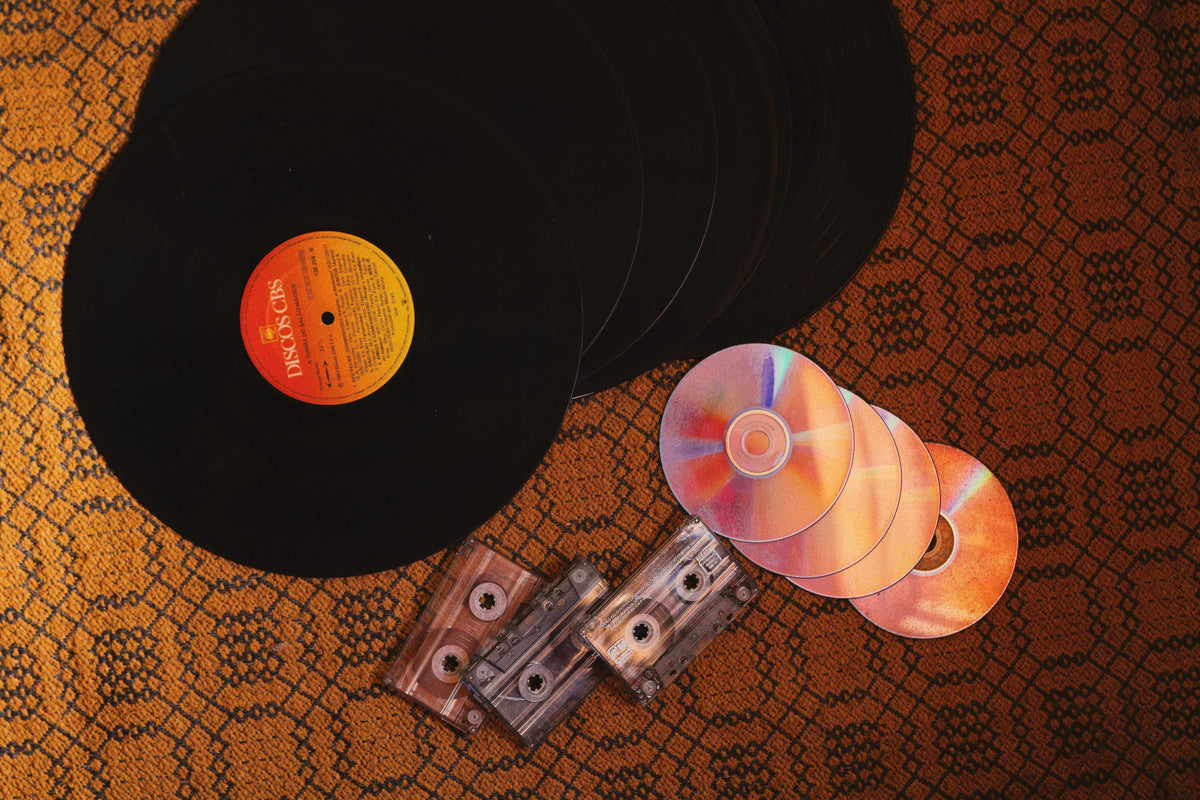
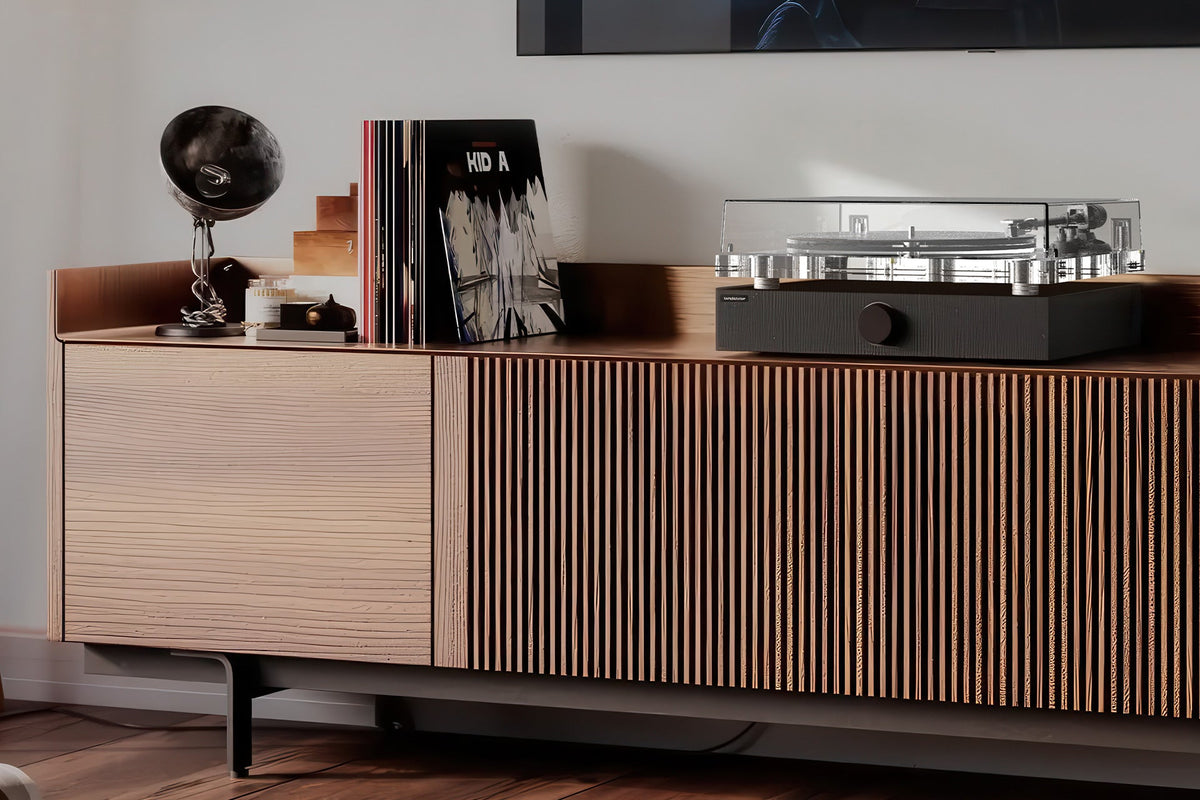
Vinyl records have a way of making themselves part of a room. Their oversized album covers look great on display, and a turntable can easily become a focal point on a console or shelf.
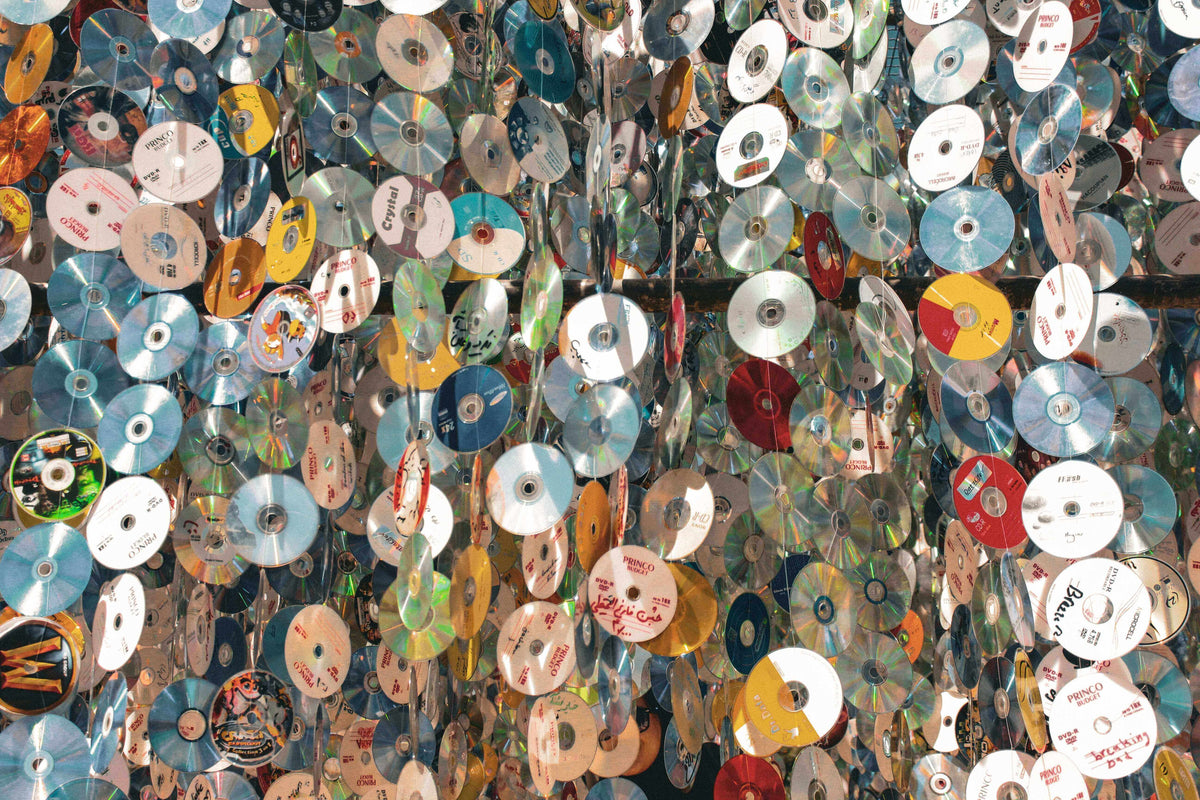
CDs are a little different. They're smaller, easier to stack, and often end up tucked away in drawers—even when the artwork and music mean just as much.
But why choose between the two?
A CD collection and a vinyl collection can share the same space without looking cluttered or competing for attention. The trick is to give each format its own role, then bring them together through thoughtful storage, album artwork, and a listening setup that suits your home.

1. Give Each Format a Different Job
Before buying shelves or rearranging furniture, think about how you use your collection.
Vinyl is naturally suited to visual display. The larger sleeves make album artwork easy to appreciate, and a record stand can keep your current favorite visible beside the turntable.
CDs are more compact, making them practical for organized storage. You can arrange them by artist, genre, color, or personal significance, then pull out a few favorites to display.
Try this simple combination:
- Vinyl: Display a few standout album covers and keep frequently played records within reach.
- CDs: Store most of the collection together, with a small selection of favorites on display.
- Audio equipment: Place the turntable and CD player where they're easy to access, rather than treating them as decorative objects alone.
This creates a space that feels curated without requiring every album to be visible at once.
2. Use Album Artwork to Tie Everything Together
CDs and vinyl come in different sizes, but their artwork can create a visual connection.
One easy approach is to choose a small group of albums that share a color palette. A red vinyl sleeve, a black-and-white CD cover, and a muted blue album can look surprisingly cohesive when arranged thoughtfully.
You could also create a rotating display based on what you're listening to that week.
- A favorite album for slow Sunday mornings
- Music for a dinner party
- A new release you're getting into
- Seasonal favorites for cooler evenings
A “Now Playing” record stand makes this particularly easy for vinyl. For CDs, a small shelf or desktop display can serve the same purpose.
The goal isn't to make your collection look perfectly color-coordinated. It's to let the artwork become part of your home while keeping the arrangement personal.

3. Choose Storage That Fits Your Space
The best storage solution depends on how much music you own and how much room you have.
| Your space | A practical approach |
|---|---|
| Small apartment | A compact media console with separate sections for CDs and vinyl |
| Living room | Low shelving with a few albums displayed above |
| Bedroom or office | A small CD player, compact speakers, and a short row of favorite albums |
| Dedicated listening area | Separate vinyl storage, CD storage, and a surface for audio equipment |
Keep vinyl records stored upright and supported, rather than leaving them in unstable stacks. Avoid placing either CDs or records somewhere exposed to excessive heat, direct sunlight, or moisture.
For a small collection, you may not need a dedicated storage cabinet at all. A sturdy shelf and a little planning can be enough.
4. Make Room for Both a Turntable and a CD Player
If you enjoy both formats, displaying the equipment together can make the collection feel more intentional.
A turntable naturally invites interaction: choosing a record, placing it on the platter, and enjoying the album artwork while listening. A CD player offers another way to revisit physical albums, especially if you have a collection from earlier years or prefer the convenience of discs.
They don't need to look identical to work together.
For example, a wooden turntable can sit alongside a compact modern CD player. A traditional black stereo component can work with a minimalist record stand. Even equipment from different eras can feel cohesive when the furniture and layout are considered as a whole.
The important thing is to check the connections before setting everything up. If you want both sources to use the same speakers, choose a speaker system with suitable inputs or use an appropriate audio switcher or amplifier.
Powered speakers can simplify a compact setup because their amplification is built in. Depending on the speakers and sources, you may be able to connect both devices without adding a separate amplifier.
A simple dual-format setup
Turntable + CD player → compatible speakers
The exact connections depend on your equipment, so check whether your turntable provides line-level output and whether your speakers accept the required inputs.
If you also stream music from your phone, Bluetooth can be another useful part of the system—but it doesn't need to replace physical playback.

5. Don't Overlook Compact CD Players
Vinyl often gets the attention in home-audio styling, but CD players can be just as useful in a modern listening space.
A compact CD player can fit on a desk, bedside table, bookshelf, or media console without demanding much room. This makes it a practical option for listeners who want to enjoy physical albums but don't have space for a full-sized stereo setup.
Some models also include built-in speakers or Bluetooth connectivity, while others are designed to connect to a separate speaker system. These features vary by model, so check the specifications before choosing one.
You can style the area around a CD player with a small stack of jewel cases, a favorite album cover, or a few carefully chosen objects. There's no need to display your entire collection.
Video placement: A short clip showing a CD being inserted into a player, followed by a wider view of the player and speakers in a real home setting.
This is also a useful way to give your collection a second listening location. A turntable might live in the living room, while a compact CD player makes your bedroom or home office feel like its own music space.
6. Keep the Display Edited, Not Empty
There's a difference between an organized collection and a room that looks like a furniture showroom.
A few visible albums can make a listening corner feel personal. Too many objects competing for the same surface can make it harder to appreciate any of them.
Try keeping the display to a few key elements:
- One album cover facing outward
- A small group of CDs or records you play often
- A turntable or CD player with enough room to operate
- Speakers positioned for listening, not just symmetry
- One or two personal touches, such as a lamp, book, or plant
You can change the albums whenever you want. The room stays organized, but the display never has to remain static.

7. Let Your Collection Reflect How You Listen
You don't need to divide your music into a strict vinyl section and CD section.
Maybe you own special editions on vinyl but keep everyday favorites on CD. Perhaps you collect records for their artwork and use CDs for albums you want to revisit quickly. Or maybe your collection is a mixture of old favorites, recent discoveries, and gifts from friends.
Arrange it in a way that makes sense to you.
The most successful listening spaces aren't necessarily the ones with the most expensive equipment or the largest collections. They're the ones where the music is easy to reach, the equipment is comfortable to use, and the albums on display mean something to the person who lives there.
Vinyl and CDs don't need to compete for space. With a little thoughtful organization, they can become two parts of the same music-loving home.






Leave a comment
All comments are moderated before being published.
This site is protected by hCaptcha and the hCaptcha Privacy Policy and Terms of Service apply.