
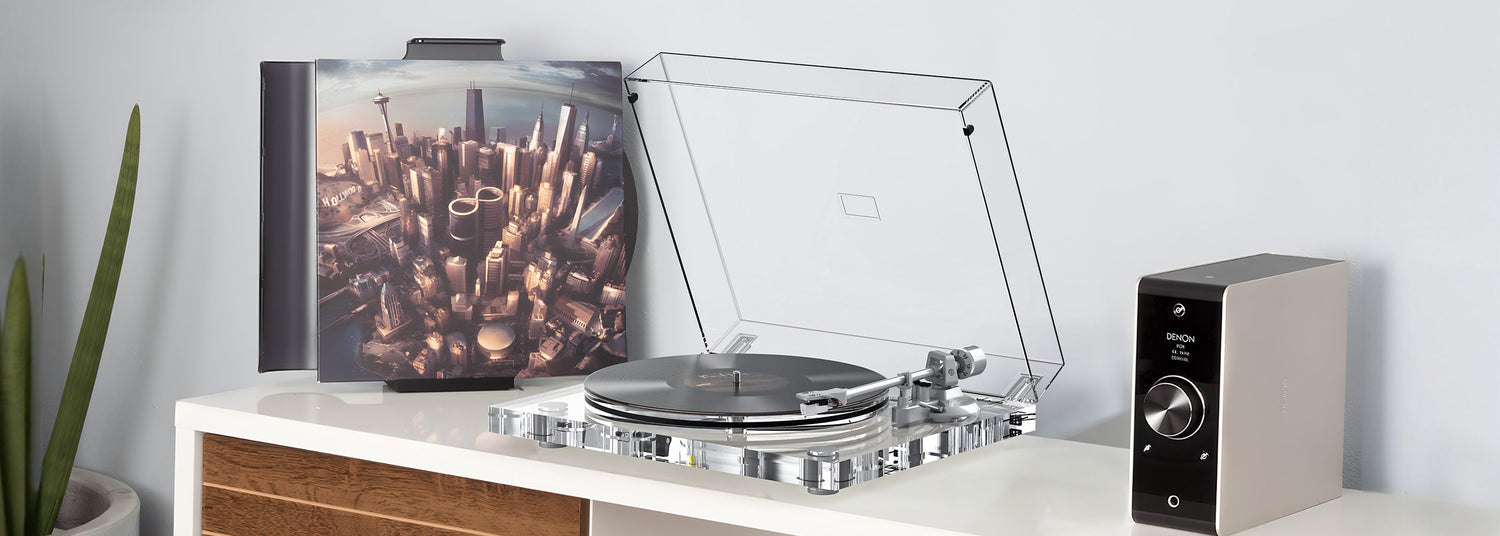
Belt-drive turntables use a rubber belt to connect the motor to the platter, which isolates motor vibration from the record — a good fit for home listening where sound quality matters more than instant start-up. Direct-drive turntables connect the motor straight to the platter, giving faster start-up and the torque needed for scratching — a good fit for DJ use or anyone who wants the platter spinning at full speed the instant they press play. For a beginner setting up a home listening system, belt-drive is generally the better starting point.
What's Actually Different Mechanically
Belt-drive: The motor sits off to the side, connected to the platter by a rubber (or sometimes nylon) belt. The belt absorbs motor vibration before it reaches the platter, and the motor itself is smaller and quieter since it isn't handling the platter's full load directly.
Direct-drive: The motor sits directly under the platter and spins it without an intermediate belt. This gives near-instant speed (full RPM within a fraction of a second) and enough torque to resist manual pressure — which is why DJs use direct-drive turntables for scratching and beat-matching.

Why Belt-Drive Is the More Common Choice for Home Listening
The isolation a belt provides matters more for sound quality than the speed advantage direct-drive offers matters for casual listening. A few seconds of extra spin-up time is irrelevant if you're not switching records rapidly or manipulating the platter by hand — but motor vibration bleeding into the platter is audible as low-level rumble, and belt-drive design exists specifically to minimize that. This is part of why the AudioKeeper ICE1-V2, a belt-drive turntable, pairs a rubber belt with a acrylic chassis — acrylic's density adds a second layer of vibration damping on top of what the belt already isolates.
The Trade-Offs of Belt-Drive
Belt-drive isn't free of downsides:
- Belts stretch and wear over years of use and need periodic replacement (typically every few years of regular use, not a frequent task)
- Slightly slower to reach full speed after pressing play — usually under two seconds, not noticeable in normal listening
- Not designed for DJ-style manipulation like scratching or fast track switching
Who Should Choose Direct-Drive Instead
If you're buying a turntable specifically to DJ, scratch, or beat-match, direct-drive is the correct category to shop in — belt-drive turntables, including the ICE1-V2, aren't built for that use case and can be damaged by the kind of manual platter manipulation DJ techniques require.
FAQ
Does belt-drive sound better than direct-drive? For home listening, many people find belt-drive quieter due to better motor vibration isolation. For DJ use, direct-drive's speed and torque matter more than the isolation difference.
Is the AudioKeeper ICE1-V2 belt-drive or direct-drive? Belt-drive.
How often does a turntable belt need to be replaced? It depends on usage, but belts on a regularly-used belt-drive turntable commonly last a few years before needing replacement — a routine maintenance item, not a sign of a defective unit.
Can I use a belt-drive turntable for DJing? Not recommended. Belt-drive turntables aren't built to handle the torque and manual manipulation DJ techniques require, and doing so can wear out the belt and motor faster than normal use.






Leave a comment
All comments are moderated before being published.
This site is protected by hCaptcha and the hCaptcha Privacy Policy and Terms of Service apply.